
Bangladesh looks to Beijing to speed its solar ambition
The two governments will form a JV which will see China invest around $500 million in setting up 450 MW of solar generation capacity and a 50 MW wind farm on land supplied by the host nation’s North-West Power Generation Company.
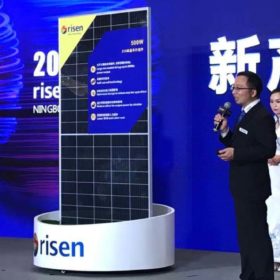
Chinese PV Industry Brief: a 15 GW factory, new standards and solar glass output
Risen Solar has unveiled plans for a 15 GW cell and module fab in Yiwu City, Zhejiang province and China South Glass is fundraising for a PV glass factory in Anhui province. Such growth, however, may be slowed by the introduction of new standards by the government.
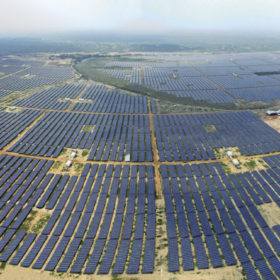
Indian developer wins world’s largest solar award
Adani Green Energy is reported to have exercised an option to double the 4 GW of solar generation capacity and 1 GW of cell and module production facilities it secured in a manufacturing-linked solar tender carried out by the Solar Energy Corporation of India in November.

Minimum mono Perc standards could halt Chinese production boom
The authorities in Beijing, concerned at ever greater solar production capacity announcements and oversupply fears, are preparing to introduce standards which would bring the recent mono Perc production explosion to a shuddering halt.

Portugal kicks-off 700 MW solar auction
Solar developers can submit applications from today. The rules of the procurement exercise were published by the nation’s Directorate-General for Energy and Geology.
Announcement of solar grid caps in China could mark fightback by network operators
After managing to bear down on costs enough to compete with coal-fired generation, it appears solar developers in China now face a new hurdle to overcome – resistance from grid companies.
Does solar sustainability go far enough?
Solar PV is on track to become a terawatt-scale industry. With this opportunity comes challenges, particularly when future raw material and manufacturing volumes are considered. For progress to be made, sustainability becomes a crucial issue. Already the first global sustainability standard for solar modules and inverters has been introduced, and it is likely mandatory measures will be applied in Europe via the Ecodesign directive. Ahead of the upcoming pv magazine Roundtable on sustainability, SMA answers some key questions about certification.
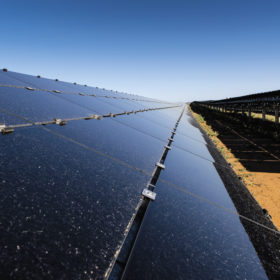
Covid-19 weekly round-up: It is still unclear how the crisis will play out on various solar segments, although one US installer says business has never been better…
Module price falls driven by the energy demand slump and Chinese oversupply may reverse at the end of the year, Germany appears immune to the Covid rooftop curse and emergency funding has been offered up to EU businesses affected by the crisis.
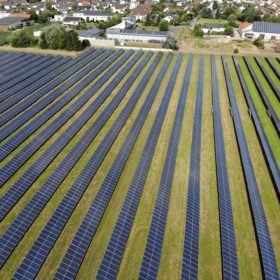
Solar costs have fallen 82% since 2010
The levelized cost of energy generated by large scale solar plants is around $0.068/kWh, compared to $0.378 ten years ago and the price fell 13.1% between 2018 and last year alone, according to figures released by the International Renewable Energy Agency.
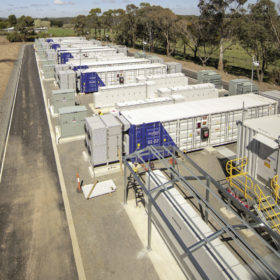
China reaches 1.7 GW of electrochemical storage capacity
According to new numbers released by the China Energy Storage Alliance, the country’s storage capacity topped 32.4 GW at the end of last year. The association said the storage market is expected to continue to grow steadily in the years ahead.
