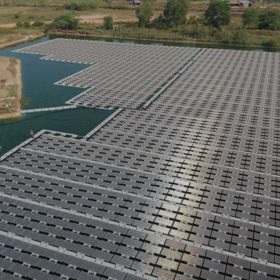
Dubai ready to explore floating PV in Persian Gulf
Amid mounting political tensions in the region, the city has issued a call for consultants to help it towards its ambitious 2050 climate goals through the use of a PV technology which is proving increasingly popular around the world.
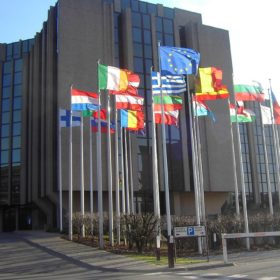
EU Court of Auditors says more renewables auctions are needed
The audit agency said at least half the EU member states will be unable to reach their 2020 renewable energy targets, including the Netherlands, France, Ireland, Poland and the U.K. It recommends citizen participation and more renewable energy auctions to increase investment and raise volume in the EU clean energy sector. Cross border renewables trade and grid improvements are also highlighted as necessary for a successful energy transition.
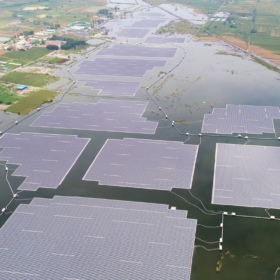
The weekend read: China’s hard change towards grid parity
Each shift in Chinese PV policy is watched by the solar world. And the reforms unveiled in late April and early May have left many scrambling to catch up. While they may rein in unbridled growth, the changes are leaning towards a future of further cost reductions, particularly soft costs, and the golden goal of grid parity PV.

Green New Deal secures support from its first national-level US labor union
The ambitious climate, jobs and social program has encountered strong resistance from some national unions, and not only those connected to professions linked to traditional power industries.
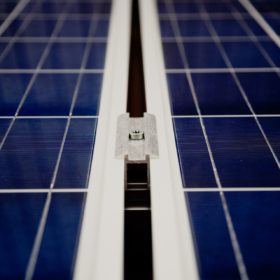
Reatile buys 20% stake in Juwi’s South African unit
The buyer has not disclosed how much it invested in the subsidiary of German EPC contractor Juwi, which is building four PV power plants with 250 MW of total generation capacity under the nation’s Renewable Energy Independent Power Producer Program.
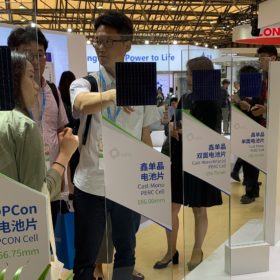
Innovation and uncertainty mark SNEC 2019
There was plenty of innovation on display at this year’s SNEC, which closed yesterday afternoon at the Shanghai New International Expo Center. The three-day exhibition ran from Tuesday to Thursday, was well attended and still ranks as the world’s largest solar energy trade show.
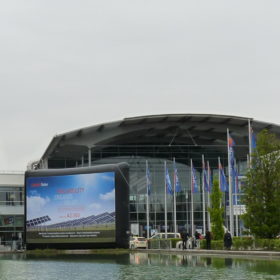
Three arrests at Intersolar Europe for circumventing EU’s minimum module price
German customs officers executed two arrest warrants during the Smarter E show in Munich. The public prosecutor’s office in Nuremberg-Fürth also confirmed another arrest, connected to an existing investigation of a Chinese PV manufacturer. The arrested executives were allegedly involved in commercial smuggling of solar modules, the customs authorities and prosecutor told pv magazine. The authorities believe minimum import prices for crystalline solar modules from China, in effect until September, were circumvented and millions of euros in payments were evaded.
GCL-Poly moves to become pure manufacturer
The polysilicon, ingot, wafer, cell and module giant made two huge announcements this week, with plans to almost double wafer manufacturing capacity just as it moves to sell off its PV project development business to state-owned energy giant China Huaneng Group.
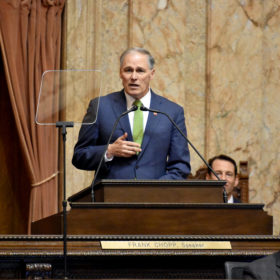
US Democratic Party bars climate change debate
The campaign of Democratic presidential contender Jay Inslee says the Democratic Party has also told the governor of Washington state if he participates in anyone else’s climate change debate he will be barred from future hustings.
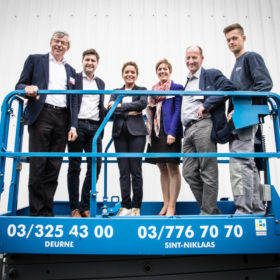
Belgium sees the biggest PPA-driven solar installation commissioned since 2013
With a capacity of 2,2 MW, the rooftop array is at the industrial plant of Belgian company Ontex, which will buy almost all the electricity generated from project developer Menapy under a 15-year power supply deal.
