
Spain’s third interconnection with Morocco could be Europe’s chance for African PV – or a boost for coal
The two nations have signed a memorandum of understanding to build a third power link connecting their electricity systems. The news will again initiate hope for the transfer of solar energy from Africa to Europe, but is that hope justified?
Prices rise slightly in Germany’s first PV tender of the year
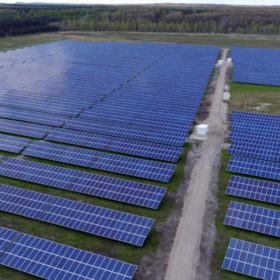
Last year’s trend continued in the first 2019 round of PV tenders. The average final price was €0.0480/kWh. Almost all the selected projects will be on arable land in disadvantaged areas of Bavaria.

China to engineer a gigawatt-scale PV plant – in space
Plans were broadly sketched out in the nation’s twelfth five-year plan, in 2008. Since then China’s Defense Science and Technology Bureau has supported key technology research. An initial, megawatt-scale project is planned in the stratosphere sometime in the 2021-2025 period.

Lyon’s BePositive event shows confidence in French PV market remains strong
The solar event in Lyon illustrated how expectations of French solar remain big despite lower-than-expected development and issues related to regulations and carbon footprint requirements. The large participation of international and Chinese players seeking business among installers and distributors is a signal things may improve in the short term, and larger volumes may be deployed in the coming years.
Ukraine’s largest PV project secures provisional FIT license
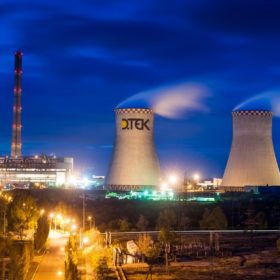
The 246 MW Solar-Farm 1 is being developed by the nation’s largest energy holding and coal power producer, DTEK. The plant will be on the territory of a spent quarry.
Power-to-gas crucial for solar-based energy system
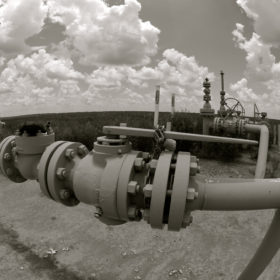
In the Infrastructure Outlook 2050 study, Gasunie and TenneT say ambitious EU climate targets can only be reached through deeper integration of the power and gas infrastructure, and with power-to-gas technologies supporting renewables. The most bullish scenario for solar states how storage and power-to-hydrogen capacity could be crucial to meet seasonality in supply and demand.
From laggard to leader: New South Wales Labor party’s election pledge for extra 7 GW of renewables
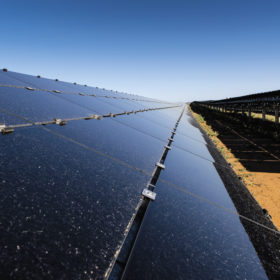
Australia’s Smart Energy Council welcomed yesterday’s launch by the NSW Labor party of a policy to drive 7 GW of renewable energy into the National Energy Market by 2030 as “the biggest rollout of renewable energy in Australia’s history”.

Pacific island nation re-tenders big solar-plus-storage project
An initial tender on Palau was won by French energy company Engie, through its unit Engie Electro Power Systems. The 100 MW microgrid project consisted of coupling 35 MW of solar and 45 MWh of storage with diesel generation.
Malaysia launches 500 MW solar tender
Selected projects will range from 1-100 MW in capacity. The procurement exercise is the third round of Malaysia’s LSS program for large-scale renewables.

Bifacial takes all in Alberta large-scale PV auction, final price cheaper than gas
The Albertan Ministry of Infrastructure allocated around 94 MW of solar capacity and the three selected projects, all using bifacial modules, were secured by Canadian Solar. The projects will generate around 55% of the provincial government’s annual electricity needs.
