
China confirms FIT level payments – but they will be ‘subject to competition’
The Beijing authorities have confirmed the payment levels to be made according to type of project and region from July onwards but an auction process will be involved so the figures are for guidance only. No decision has yet been made on the 30 GW of capacity added since the end of May.

Renewables may be the victor in Spanish election
Although it is still unclear how the victorious Socialist Party will build a majority in parliament, listed Spanish energy companies such as Solaria and Audax saw the price of their shares rise significantly after the vote.
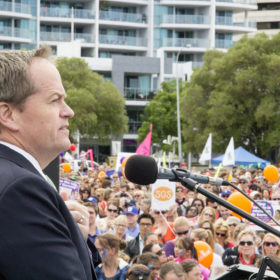
Labor plan to aggregate 4,000 schools into virtual power plants in $1 billion solar program
Australia’s federal Labor party has pledged to roll out PV generation and batteries at schools across the nation, and to create VPPs supporting up to 365 MW of capacity.

Dhaka water authority re-tenders plans for 12 MW solar plant
Plans are back on track for what the authority intends to be the first of many solar installations, after potential bidders complained in January that the proposed contract was not viable.

Mexico announces plans for 13 GW of new generation capacity – but no renewables in sight
The energy program will initially relate to combined cycle gas power plants with a capacity of 2.76 GW. No mention was made in electric utility CFE’s official statement of the possibility of increasing capacity by harnessing renewables.

Tenerife plans 350 MW of solar alongside 1 GWh storage
A new project is in line with the target of the Island Council of Tenerife to cover all electricity demand with renewable energy. The development of electromobility and storage is key to the ambition.

Lithuania announces first renewables auction and €4.5 million in solar rebates this year
The first mixed auction for renewable energy technologies will be held in September and will allocate around 300 GWh. The government will apportion €20 million for solar rebates up to 2023.
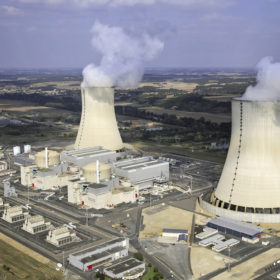
The weekend read: Playing by the carbon footprint rules
Developers and manufacturers looking to enter France’s utility-scale segment must deal with controversial rules which prioritize projects relying on low-carbon emission modules. But what makes a low-emission module? Clearly ones that are made in France or elsewhere in Europe, according to market data. But despite clearly increasing project costs, the rules do not seem to be an obstacle for the planned gigawatt-scale growth of solar in the country over the coming years.
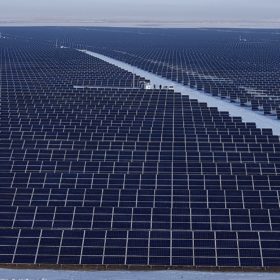
EBRD, Green Climate Fund to help finance 30 MW in Kazakhstan
The international financial institution and the South Korea-based fund have agreed to jointly lend $16.7 million to Chinese developer Universal Energy to build a 30 MWp solar project in the eastern part of the Central Asian country.
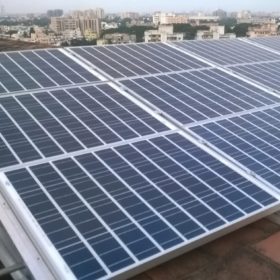
World Bank to support efficient, clean cooling in developing countries
By 2050, energy use for cooling is projected to triple, according to the World Bank. And by 2050, demand for cooling in countries such as India, China, Brazil and Indonesia will grow fivefold, putting pressure on already strained energy systems and hampering efforts to curb climate change.
