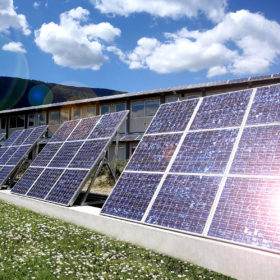
Fitch revises up outlook for French solar market
The U.S. firm expects France will reach a cumulative capacity of 28 GW by 2027, 3 GW more than previously forecast. The reasons for the increase are the renewed efforts of the French government to push for more solar, and the solar plans of big energy players such as EDF and Total.

Taiwan: Schedule agreed for three-way solar merger
A timetable has been set for the merger of three of Taiwan’s largest solar cell manufacturers, according to reports from the state-owned Central News Agency. The companies held separate board meetings last week and confirmed the transaction is set to be completed on October 1.
Deadline extension in Tunisian PV tender
Developers have been given an extra two months for bids adding up to 70 MW of new capacity. With no FIT scheme, bidders compete to offer the most attractively priced 20-year PPA level.

Second-life EV battery market to grow to $4.2 billion by 2025
Circular Energy Storage, a London-based research and consulting group, reports a strong business case for reconstituted electric vehicle batteries for energy storage applications. As the EV and static storage system markets grow rapidly, synergies could be a useful tool for continued cost optimization.
Sale of controlling stake in China’s largest poly maker falls through
Shanghai Electric’s move to take over GCL-Poly’s Jiangsu Zhongneng has fallen through because conditions are not ‘mature enough’. The development, announced this afternoon to the Hong Kong Stock Exchange, will be closely watched by the global solar industry.
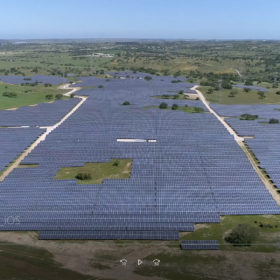
Spain’s Holaluz to sell power generated at 46 MW solar park in Portugal
The solar plant was commissioned last week in Ourique, southern Portugal. The project was developed by UK-based renewable energy company Welink and Chinese engineering services provider China Triumph International Engineering (CTIEC).

SolarEdge reports record revenues in second-quarter results
The company has experienced continued growth and after the acquisition of a UPS supplier – as well the potential for Chinese power electronics manufacturers to suffer under proposed new inverter tariffs – SolarEdge feels confident of continued growth.
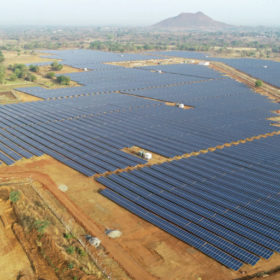
India: No 25% duty after effect? Odisha auction sees low tariffs
In the first big auction, a day after the imposition of a 25% safeguard duty on solar imports, the winning tariff of Rs 2.79 (US$0.041) at the 200 MW Odisha auction took the industry by surprise.

BREAKING: Trump calls for 25% tariffs on Chinese inverters, other products
U.S. President Donald Trump has asked trade officials to consider increasing import duties from 10% to 25% on a list of products from China, including inverters, AC modules and non-lithium batteries.

India solar water pump scheme could add 150 GW, report says
Greenpeace India, Germi, and the IWMI-Tata Water Policy Program have released a report stating that the Indian government’s latest ambitions to deploy solar water pumps could meet the country’s solar PV target of 100 GW, if done comprehensively. So far the plan goes as far as 28 GW, and still needs legislative approval.
