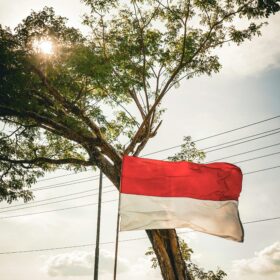
A 100% solar Indonesia in 2050
Indonesia has all the solar energy and pumped-hydro energy storage potential required to become a solar giant by mid-century. On current trends, Indonesia will be the fourth largest producer of solar energy by 2050.
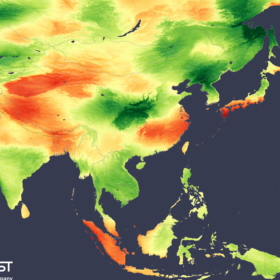
Typhoon, monsoon, record heatwave impacted irradiance across Asia in July
In a new weekly update for pv magazine, Solcast, a DNV company, reports that diverse weather conditions in July resulted in varying irradiance levels across Asia. While a typhoon in the Philippines and a monsoon in India had a negative impact on irradiance, a strong subtropical ridge saw China and Japan record their warmest July on record.

‘It is crucial for our industry to take proactive steps to engage and empower young girls from an early age’
This week, Women in Solar Europe (WiSEu) gives voice to Paula Santolaria Martín, Senior Business Analyst at Schneider Electric. She says diverse teams not only enhance decision-making processes but also cultivate a sense of belonging and unity. “Embracing these two factors is not just a must nowadays, but it also fuels and lightens our ability to thrive in a dynamic and ever-evolving industry like Solar PV globally,” she stated.
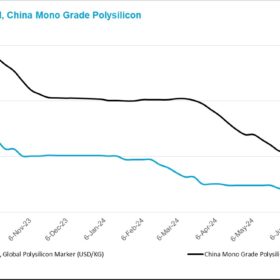
Polysilicon prices stable, futures listing opens possibilities in China
In a new weekly update for pv magazine, OPIS, a Dow Jones company, provides a quick look at the main price trends in the global PV industry.

‘I was hired while on maternity leave’
This week, Women in Solar Europe (WiSEu) gives voice to Valentina Scaglione, Asset Management Director at Econergy Group. She says Companies should recognize and accommodate the specific needs of women, such as flexible work arrangements. “Prior to the COVID-19 pandemic, I was already working flexibly from home and the office, which positively impacted my well-being,” she states.
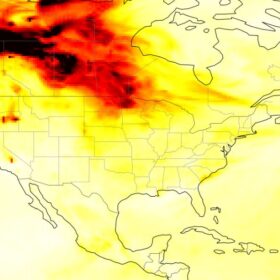
Aerosols from wildfires slash North American solar production
In a new weekly update for pv magazine, Solcast, a DNV company, reports that, throughout July, smoke from wildfires in Canada and the US West Coast significantly impacted irradiance across North America, while Hurricane Beryl and upper atmospheric conditions delivered unstable cloud cover across the central and eastern United States.
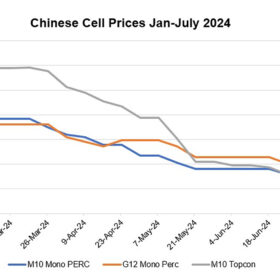
Chinese solar cell prices fall amid oversupply
In a new weekly update for pv magazine, OPIS, a Dow Jones company, provides a quick look at the main price trends in the global PV industry.

Battery storage on a capacity market
In Germany – but not only there – there is a heated debate about the pros and cons of a capacity market. The German Renewable Energy Association is against it, and recently the German New Energy Industry Association, the DIHK and the EEX energy exchange have also taken a clear stance: Germany does not need a “power plant subsidy program.” In this article, four experts explain why battery storage can also play an important role in a capacity market and make recommendations on how the design of the market can help avoid mismanagement, wrong incentives and unnecessary costs.
Can the grid cope with the surge in electricity demand?
The grid needs to modernize to meet a booming demand for electricity, which is only predicted to grow even further in coming years. IEC Standards are key to help with the transition.
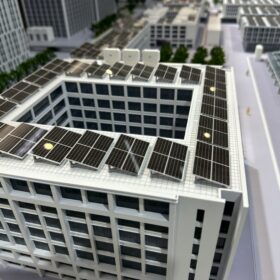
Smart buildings key to overcoming rooftop PV hurdles
In its latest monthly column for pv magazine, SolarPower Europe explains how several European countries are moving away from support schemes for injections and towards the adoption of time-variant supply tariffs, which play a crucial role in reducing daily price fluctuations. This shift challenges the traditional business case for rooftop PV, which often relies on maximizing grid injections.
