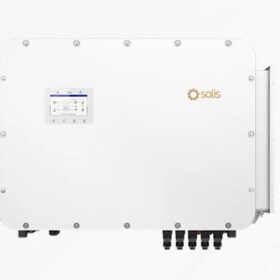
Solis launches new hybrid inverters for C&I solar
The Chinese manufacturer said its new product is the world’s largest wall-mounted hybrid inverter. The series includes three models, with AC outputs of 80 kW, 100 kW, or 125 kW.
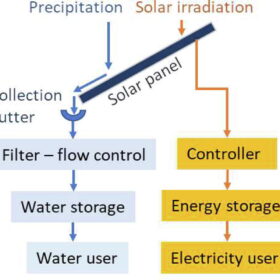
How to combine photovoltaics with rainwater harvesting
Scientists have developed a system that harvests rainwater running off PV panels for household use or hydrogen production. Their analysis showed that, in the southern Sahel, the system can meet both the energy and water requirements for electrolysis, with surplus rainwater covering up to 50% of a household’s daily water demand.
Modern slavery and other clean energy ESG risks
Despite debates in some parts of the world, we can expect environmental, social, and corporate governance (ESG) regulation to continue making headlines in 2025. Everoze Partner Ragna Schmidt-Haupt demystifies the key sustainability risks and opportunities for solar and battery energy storage system (BESS) projects.

The challenge of truly clean-powered operations
Growing corporate interest in hourly matching power purchase agreements (PPAs) is expected to drive the pairing of PV, wind, and battery energy storage systems (BESS), with potential broader impacts on the energy procurement market, as Neil Ford reports.
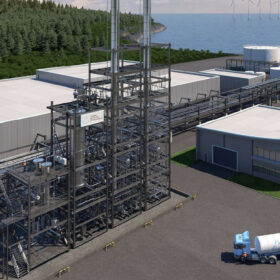
Will the green hydrogen dream take shape?
After a global flurry of green hydrogen announcements, fuel cell company insolvencies, and a sharp market reassessment, solar developers are questioning near-term green hydrogen demand. pv magazine’s Carrie Hampel takes a look at the international landscape.
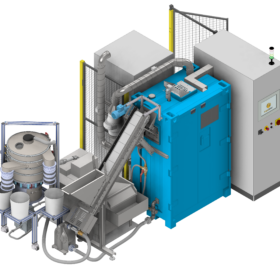
PV module recycling tech based on electrohydraulic shockwave fragmentation
An international research team has developed a new machine that utilizes shockwaves to separate the different materials of a PV module. Chemical processes can be further used to extract silicon and silver. Results show the recovery of more than 99.5% of the original weight of the panels.

Six-year test field shows agrivoltaics can be critical for rice productivity
Scientists in Japan have conducted a field experiment in rice plantations hosting agrivoltaics systems and have found that rice growth can be affected by reduced biomass and reduced panicle number. However, their analysis has also shown that gross return in lowland rice agrivoltaics can be 14 times higher than rice growth without PV.
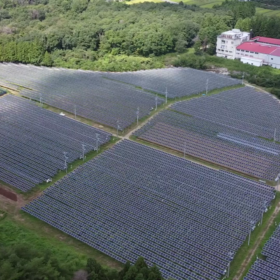
Japan’s energy R&D agency unveils solar strategy
Japan’s New Energy and Industrial Technology Development Organization (NEDO) has published a solar strategy to scale up deployment and drive next-generation technology, aiming for carbon neutrality by 2050.
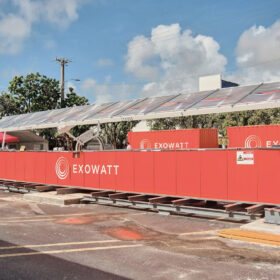
Powering the AI revolution
Developers from the renewable energy and data center markets are working to find common ground to meet surging energy demand fueled by the artificial intelligence boom.

Heat pump control strategy for energy communities
Researchers have utilized measured data from a small energy community on a Finnish university campus to simulate its operation under various control strategies. The first control strategy prioritizes the use of heat pumps, while the second prioritizes price. Total costs were reduced by up to 25% with the second option.
