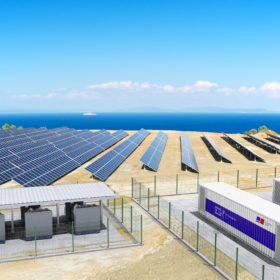
Solar-plus-storage for the Cook Islands
Around 4.2 MWh of energy storage capacity will be connected to a solar and diesel micro-grid on Rarotonga, the largest of the islands in the South Pacific nation. Three 40-foot containers with a total power output of 4.8 MVA will be used as a power reserve and for grid support by utility Te Aponga Uira.

Will a watered down EU Just Transition Fund still be effective?
The EU Council has rejected a Covid-inspired European Commission proposal for a €40 billion warchest to help coal-dependent regions shift to renewables, with the heads of member states instead allocating €17.5 billion. Despite the final figure being €10 billion higher than that suggested by the commission before coronavirus battered Europe, questions have been asked about how useful the program will be.

Daily news round-up: Philippines could be set for 1.5 GW more solar and Tesla CEO has been dreaming of electric flight
Plus, details have been revealed of a 2 MW/2.5 MWh grid scale storage demo project in Switzerland and for a peer-to-peer renewable energy certificate marketplace in Southeast Asia.
Portuguese government confirms world record solar price of $0.01316/kWh
The Portuguese government has revealed some of the preliminary results of the national solar auction which closed on Tuesday. Antonio Delgado Rigal, chief executive of energy forecasting service Aleasoft, said that the 15-year contracts awarded in the auction were the key to understanding the reason of such a low price. This, combined with the rights for land and grid connection guaranteed by the auction, makes attractive bidding at low prices.
Global green hydrogen project pipeline reaches 50 GW
International thinktank IEEFA says there are 50 viable green hydrogen projects under development with an estimated renewable energy capacity of 50 GW and the potential to produce 4 million tonnes of the fuel annually.
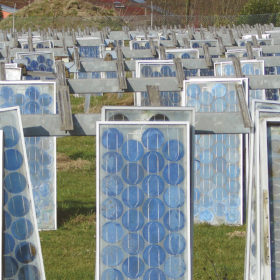
Recycling PV panels: Why can’t we hit 100%?
In February, non-profit EU solar panel recycling body PV Cycle announced it had collected 5,000 tons of modules in France, of which 94.7% could be recycled. A reader asked us about the remaining 5.3% and here, PV Cycle’s communications manager, Bertrand Lempkowicz, responds.
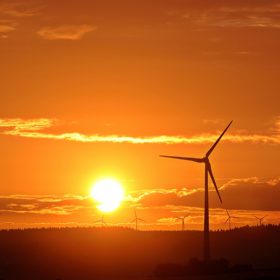
Wider wind-solar complementarity would mean less need for storage
A study from the Lappeenranta University of Technology states a deeper complementarity between solar and wind generation may favor renewables deployment reducing the need for stronger developments in storage technology. Combining solar with wind more widely could also reduce the need for ramping and improve the reliability of energy supply, say the researchers.

Global daily round-up: Israel set to import solar power from Jordan and a hydrogen deal for South Holland
Plus, some 5 GW of solar could be heading to Botswana and Namibia and news of a new automotive fuel cell building in Ulm, Germany.
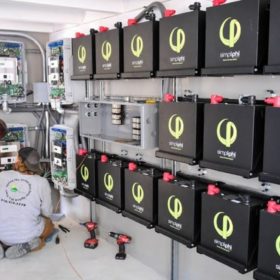
Simpliphi predicts cobalt-free battery takeover sooner than expected
pv magazine spoke with Catherine Von Burg, CEO of the Californian battery company, to discuss why she believes lithium-iron-phosphate is the chemistry of the near future.
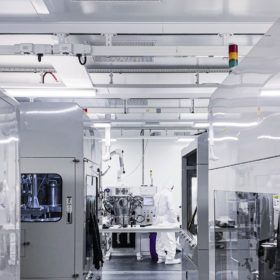
The weekend read: Coming around
Given the number of batteries (primarily lithium-ion) that are required to decarbonize the power and mobility sectors, the industry is now preparing for a mountain of battery waste. Recycling is technically feasible, but is also subject to sensitive economics. The framework in which recycling companies can achieve the best life-cycle costs for batteries needs to be carefully enabled through policy – and it will likely include a mixture of technologies and business models, in order to allow life-cycle emissions of batteries to be brought down.
