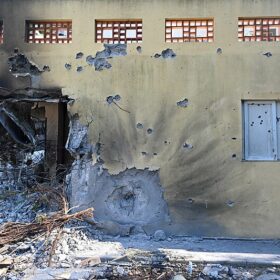
Israel to build energy communities in villages destroyed by Hamas
Israel’s Ministry of Energy and Infrastructure says it is currently developing a multi-year program for communities attacked by Hamas on Oct. 7. It aims to deploy 5 GW of energy in the destroyed areas, once residents return.
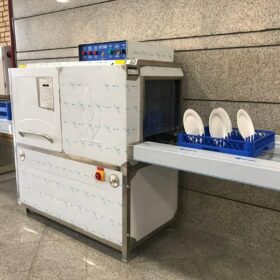
Using air conditioning to cool down PV modules, dry dishes
An international research team has investigated how air conditioning may be used to reduce the operating temperature of PV panels. The researchers not only found that the proposed approach is technically viable, but they also tested the use of excess heat from the panels for drying dishes.
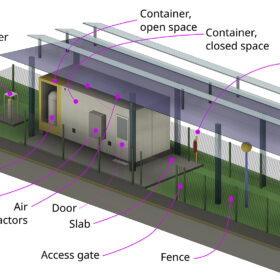
PV-driven microgrid for hydrogen, cooling
The University of French Polynesia has built a PV-driven hydrogen generation unit that combines a hydrogen chain with a thermochemical unit. The latter is used to recover waste heat from the electrolyzer and fuel cell to enable deferred cooling production for air conditioning.
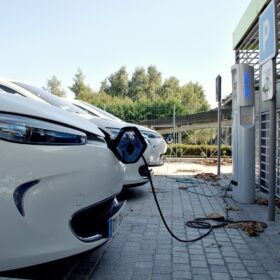
California to use flexible appliances for renewable energy integration
California plans to shift 3 GW of load from dirtier, more expensive times of day to cleaner, less expensive times by setting flexible demand standards for many types of electric appliances. Global interest in California’s work is high, according to a state agency commissioner.
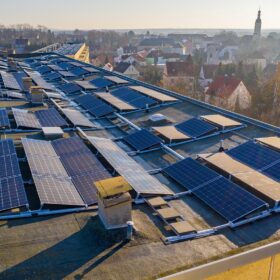
Collectively owned PV systems improve energy community performance
Researchers have looked into the impact of potential regulated charge exemptions on two types of energy communities in 39 European countries. They have found that communities with collectively owned PV systems achieve greater savings.

South Africa’s largest battery storage project goes online
South Africa’s public utility, Eskom, has switched on a 20 MW/100 MWh Hex battery energy storage system (BESS) in Worcester, Western Cape province, to mitigate the challenge of load shedding.
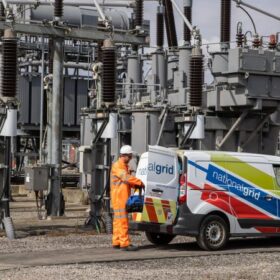
UK grid operator streamlines 10 GW of battery storage
Plans to connect around 10 GW of battery energy storage projects in England and Wales are now in the fast lane. This comes on top of 10 GW of capacity unlocked at distribution level, including shovel-ready solar farms, onshore wind, and battery storage projects.
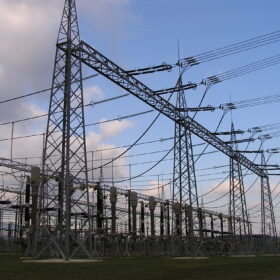
Overview of grid codes identifies CEI 0–21 standard as potential international benchmark
Conducted by Italian scienitists, the analysis includes standards such as IEC 61727, the US EREC G83/2 Recommendations, Germany’s VDE-AR-N 4105, China’s GB/T 19964-2012 and GB/T 20,046, Italy’s CEI 0-21, Australia’s AS 4777.2, and New Zealand’s AS 4777.2 standards, as well as the United States’ IEEE 1547.
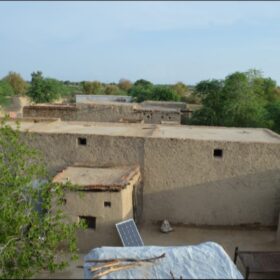
New research sheds light on off-grid solar costs in remote villages
An international research group has assessed the economic feasibility of exclusively powering remote villages in Pakistan with off-grid solar-plus-storage projects. They said that their proposed system configuration has a “justifiable” net present cost.
Weekend Read: Install grid-connected solar, rinse, repeat
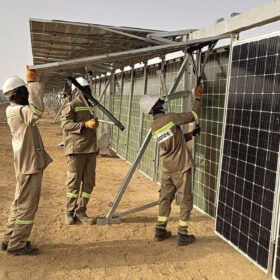
Will a redeployable solar and energy storage solution be the answer to unreliable grid electricity across much of Africa, as its developer proposes? Or will it merely be a temporary solution that will see cash-strapped utilities kick the can of universal energy access further down the road?
