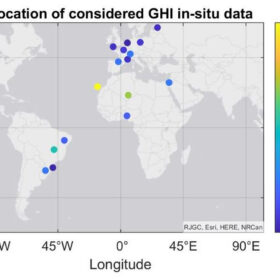
Benchmarks for solar energy data, methods
The lower the uncertainty in solar resource data, the lower the investment costs. IEA PVPS Task 16 has organized and published two benchmarks to make uncertainty of models and data comparable – a first important step. The benchmarks included modeled solar resource data and methods to fill gaps in measurements.

Infrastructure reform is key to accelerating Africa’s energy transition
In its latestt monthly column for pv magazine, the International Renewable Energy Agency explains that, in order to realize Africa’s vast potential, we must ensure there is adequate investment and infrastructure development to support renewable energy. In the coming years, this means urgently overcoming the structural barriers across three priorities: infrastructure, policy, and institutional capabilities.
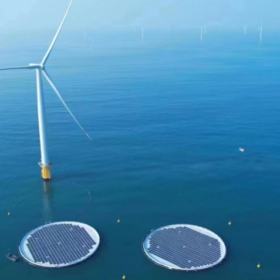
The Hydrogen Stream: Researchers test marine green hydrogen feasibility
Mexican researchers have revealed test results for offshore wind-based hydrogen production, while Turkey has started negotiating hydrogen facility partnerships with the United Arab Emirates.
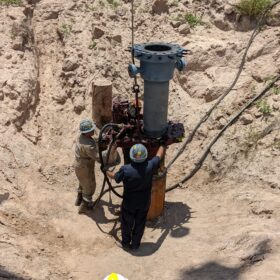
Sage demonstrates long-duration storage with underground reservoirs
US-based Sage Geosystems has presented field results showing that its Earthstore underground storage system can provide 18 hours or more of storage capacity, in addition to short-duration power. The solution is said to be cost-competitive with lithium-ion batteries and natural gas peaker plants.

Agrivoltaic facilities with single-axis trackers have lower LCOE than those with fixed structures
New research from Belgium shows agrivoltaic facilities with trackers perform significantly better than projects with fixed structures. The scientists found projects with tracking achieved an LCOE of €0.077 ($0.082)/kWh, while facilities with fixed structures were found to have an LCOE of €0.10/kWh.
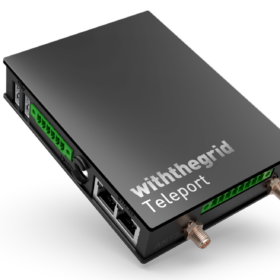
Real-time interface to reduce Netherlands’ grid congestion
All new PV plants over 1 MW in the Netherlands will have to use a real-time interface to make their facilities better communicate with the grid operator starting from next year. Utrecht-based Withthegrid, has developed an interface that is compatible with a number of brand-name inverters.

Israel frees up grid space for 2 GW of renewables
Israel has announced plans to deploy 2 GW of grid-connected renewables. It will allow for additional renewable plants to be built without causing grid congestion, based on specific parameters.
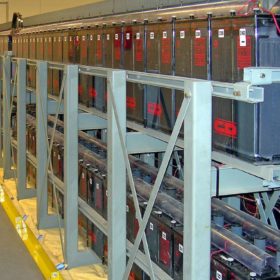
Distributed PV, battery storage curtailment in low-voltage networks
University of New South Wales (UNSW) researchers have looked at energy losses in South Australia and have identified average curtailment of 1.5% for distributed PV sites and 0.2% for distributed PV coupled with batteries, but some locations experience generation losses of up to 25%.
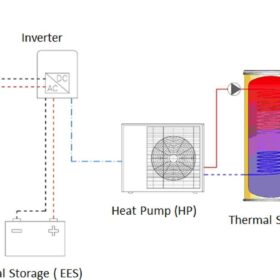
PV-powered heat pumps with thermal, electrical storage
Italian researchers have looked at the potential of thermal and electrical energy storage to improve self-consumption rates in buildings when coupled with PV-powered heat pumps. They have concluded that such an approach could yield self-consumption rates of more than 80%.
What can Western utilities learn from emerging-market peers?
While electric companies in the Global North wrestle with how to keep the lights on as ever bigger solar and wind park capacities come online, developing-world utilities are experimenting with new ways of working and transforming the relationship between themselves and millions of new customers.
