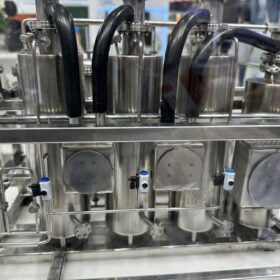
Integrated risk-cost framework for DC-coupled PV-electrolyzers
Scientists in Austria have conducted a risk analysis for four setups for coupled PV-electrolyser systems, and tested them under three use cases. They calculated failure probability as well as the levelized cost of hydrogen and its risk-weighted variant.

Overvoltage, chain reaction, improper disconnections behind Spain’s blackout
Spain’s Minister for the Ecological Transition, Sara Aagesen, has presented an official report on the April 28 blackout. She also announced 11 measures to strengthen grid stability and prevent future incidents.
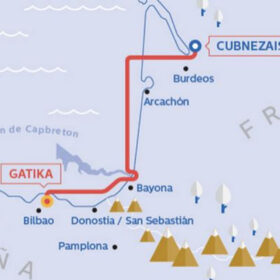
France, Spain raise interconnection link capacity from 2.8 GW to 5 GW
France and Spain have driven up the planned capacity of their Bay of Biscay electricity interconnection from 2.8 GW to 5 GW, with €1.6 billion ($1.8 billion) in financing approved by the European Investment Bank (EIB).
Romania updates grid connection rules
Romania’s energy regulator ANRE has adopted new grid connection rules, introducing changes to the solution study process, financial guarantee requirements, and connection agreement terms to prioritize mature projects and ease grid congestion.
Coupling heat pumps with district heating
Researchers in Sweden have analyzed the impact of a hybrid heating system combining heat pumps and district heating on five real buildings. The analysis showed that residents were able to save up to €2,768 ($3,159) compared to a scenario without source coupling.
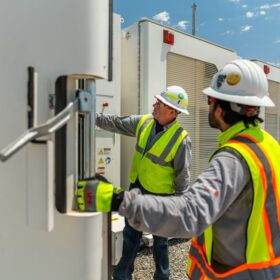
Cybersecurity as a powerful tool to enable resilient energy storage projects
Compliance with ever-increasing cybersecurity regulations is a challenge for many in the energy storage industry but it creates big opportunities for risk-mitigation. Katherine Hutton and Lars Stephan, from energy storage integrator Fluence, take a closer look at cybersecurity compliance risks and how investors can mitigate revenue losses with a clear strategy.
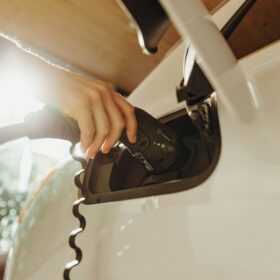
EV charging shapes PV investment, grid load in community study
Researchers in Spain have simulated an energy community with varying electric-vehicle penetration levels (0%, 50%, and 100%) to analyze system optimization under different regulatory frameworks and EV brands. Charging strategies significantly affected overall performance and outcomes.

Optimizing endless PV-driven heat pump scenarios for costs, self-sufficiency
Researchers have used mixed-integer linear programming-based multi-objective optimization to optimize 30,912 unique scenarios showing heat pumps operating in combination with PV power. The optimization modeling was conducted under day-ahead spot market prices terms.
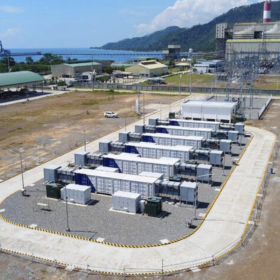
India offers $631.5 million to support 30 GWh of battery storage
The Indian government has announced viability gap funding (VGF) of INR 54 billion ($631.5 million) to support 30 GWh of battery energy storage systems (BESS), allocating capacity among 15 states and the state-owned power producer NTPC. The scheme provides INR 1.8 million/MWh and requires projects to be commissioned within 18 months through competitive bidding.
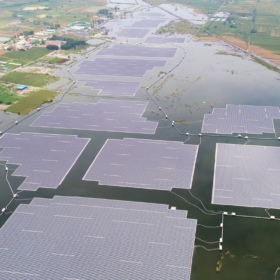
Water-based photovoltaics reach global capacity of 21.18 GW
An international research team has developed an index-based remote sensing method to see trends in the global development of water-based PV. It has found that China currently accounts for 80% of the global total deployed capacity.
