‘Grid-forming technology is no longer experimental – it’s here and working’
In grids increasingly dominated by renewables, grid-forming technology is emerging as critical tool for maintaining stability and ensuring reliable power system operation. In this interview with ESS News, Rui Sun, Sungrow’s Deputy General Manager-Grid Technology Center, explains how grid-forming works, why it matters, and where the technology is already proving its value. He elaborates on technical challenges, regulatory gaps, and why grid-forming could soon become the new industry standard.

Australia grants major project status to 6 GW power export plan
SunCable has welcomed the Australian federal government’s decision to renew major project status for its Australia-Asia PowerLink, which aims to deliver up to 6 GW of renewable power from the Northern Territory to industries and urban centers in Darwin and Singapore.

Researchers identify optimal level of solar, battery storage for European energy market
Researchers in Hungary have developed a model to calculate the optimal PV and battery storage balance to support the European grid in the next few years. They found that the cost-optimal range is at 530–880 GW of PV, combined with battery storage equivalent to 2.5–7.5% of the total intermittent capacity.
Novel sizing approach for PV, battery storage in smart homes
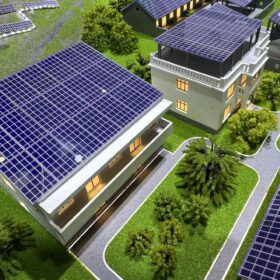
Scientists in Iran have developed a novel framework to optimize the capacity of PV and battery storage in smart homes, using a two-stage stochastic programming model. They considered the uncertainties in the grid, market price, and PV output, while also looking at different operation cases.
New method for PV site suitability mapping
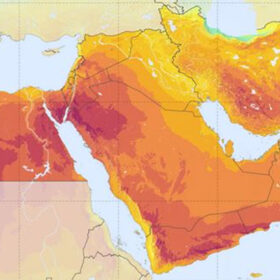
Scientists in Malaysia have developed a novel deep-learning method for PV suitability mapping. Applying the new approach to the Middle East, they found that approximately 5.8% of the region has very high suitability and 11.5% is highly suitable for PV energy development.
UK rejects CfD bid for 10.5 GW Morocco solar-wind subsea cable
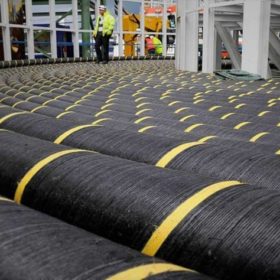
The UK government has rejected a contract-for-difference (CfD) application for the proposed Xlinks interconnector, a 3,800 km submarine cable to deliver power from a planned 10.5 GW solar-wind facility in Morocco to the UK grid.

Fraunhofer activates Europe’s biggest vanadium flow battery
Fraunhofer Institute for Chemical Technology (ICT) has commissioned Europe’s largest vanadium redox flow battery, a 2 MW/20 MWh pilot facility in Germany.

China to deploy 253 GW of PV for desert control in arid north
China plans to install 253 GW of solar capacity and restore more than 670,000 hectares of degraded land by 2030 under a large-scale desert PV program in its northern and northwestern regions. It aims to curb desertification and expand renewable energy deployment.

Estonian solar park enters Baltic frequency markets
Eesti Energia and Emsys VPP have prequalified the 75 MW Sopi solar park to deliver 30 MW to the Baltic region’s automatic frequency market and 45 MW to its manual frequency market.
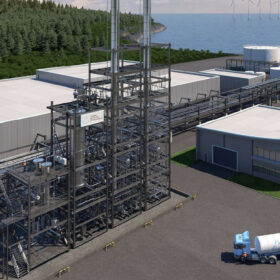
Scientists see potential for 3,000 PV-powered methanol sites in Europe
Researchers have analyzed the potential implementation of green methanol from CO2 capture in existing industries, based on European GIS data. While they found 9,213 theoretically viable municipalities, the number fell to 3,016 when considering the space needed for a PV installation around the plant.
