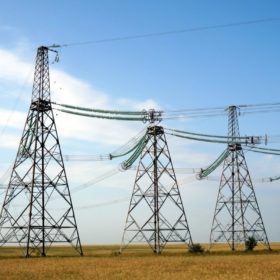
Entso-E targeted in recent cyberattack
The European Network of Transmission System Operators for Electricity said on Monday that unidentified hackers recently targeted its computer networks.
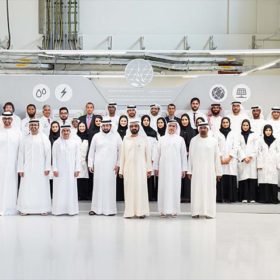
DEWA opens new solar R&D center
The Dubai Electricity and Water Authority’s new research facility at the Mohammed bin Rashid Al Maktoum Solar Park will primarily focus on solar power, energy efficiency, and the integration of smart grids.
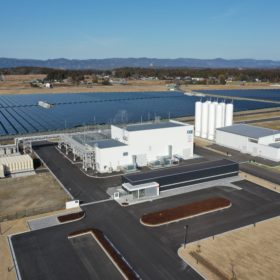
Solar-powered hydrogen production in Japan
Toshiba has finalized construction of a 10 MW hydrogen plant in Fukushima prefecture which draws power from 20 MW of solar generation capacity as well as the grid.

Optimistic solar outlook in India dimmed by Covid-19
Developers are also expected to drag their heels over project completion during the first half of the year as the safeguarding duty applied to imported Chinese and Malaysian solar products is due to expire at the end of July.

UK includes solar in new generation capacity auction
The announcement by the Department for Business, Energy and Industrial Strategy of an auction which will include solar next year appears to back prime minister Boris Johnson’s claims to be serious about the nation’s net-zero carbon ambition.
Storage prevails in France’s capacity auction
The Ministry for the Ecological and Inclusive Transition’s long-term auction was organized by grid operator RTE under the French capacity procurement mechanism. Storage accounted for 253 MW of the capacity assigned in the auction, which was open to all decarbonizing technologies.
Australia’s AEMC rejects new rule for calculating transmission losses
The Australian network regulator has ignored pleas from some of the biggest solar and wind project owners in Australia to change the way marginal loss factors (MLFs) are calculated. While it has acknowledged that transmission has failed to keep pace with renewable energy investment, it did not offer any suggestions on what should be done to ameliorate the problem.
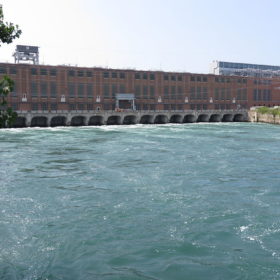
Quebec as a big battery for the northeastern US
Researchers at MIT say the immense hydropower resources of the Canadian province could be used as storage to even out the supply of intermittent renewables generation in New England and New York state.
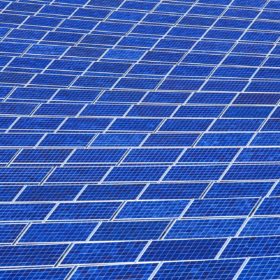
Dutch golf club to diversify with 147 MW solar park but will grid congestion bunker the plans?
PV project developer Solarfield is planning to build a plant under the SDE+ renewables incentives program. Construction is planned to start in 2021. The solar park will be in the province of Flevoland, one of the areas where grid congestion is jeopardizing the deployment of large scale solar.
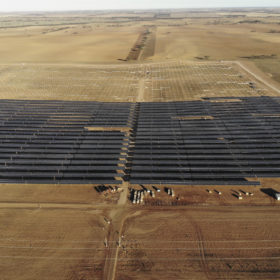
Australian state frees itself from federal shackles to unlock more grid capacity
The government of Victoria has decided to break from national electricity rules and introduce legislation to fast-track priority projects such as grid scale batteries and transmission upgrades, and make room for more large scale solar and wind. The announced reforms have prompted a flurry of reaction.
