
Swiss startup offers lifetime guarantee for second-life batteries
Switzerland startup Evolium Technologies’ subscription-based business model offers residential battery owners a lifetime guarantee on second life batteries. The startup tests and remotely monitors each battery cell so it can alert customers when a cell is under-performing.
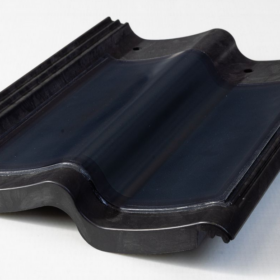
TNO unveils 12.4%-efficient perovksite solar tile
The Dutch research institute has presented what it describes as the world’s first perovskite-based roof tile, achieving up to 13.8% efficiency on standalone modules and 12.4% when installed on a curved surface. The flexible modules were produced using TNO’s experimental roll-to-roll platform,

Chinese researchers report 700 Wh/kg lithium-metal battery
A team from Nankai University and the Shanghai Institute of Space Power-Sources has developed a hydrofluorocarbon electrolyte enabling lithium-metal cells to operate at temperatures as low as -70 C.
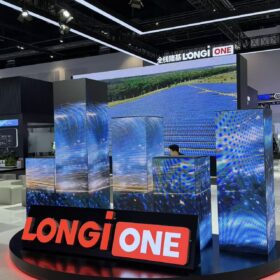
Longi launches integrated solar-plus-storage platform strategy
China-based solar manufacturer Longi is shifting from a multi-vendor system design to a unified solar-plus-storage architecture built around in-house technologies.
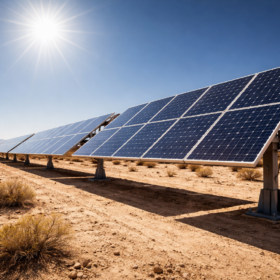
UNSW study finds tracker-based PV systems experience higher UV degradation than fixed-tilt arrays
New research from the University of New South Wales shows that PV module degradation varies widely with system design and location, driven by UV exposure, temperature, humidity, and atmospheric conditions. Tropical and desert regions face the highest stress, highlighting the need for climate-specific testing and system design.
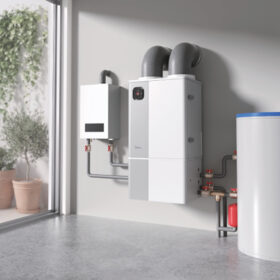
Midea unveils PV-compatible indoor heat pump for space-constrained residential applications
Midea has launched a compact indoor air-source heat pump for retrofit and space-constrained homes. The R290-based system offers up to 4.45 kW output, a coefficient of performance of 4.5 and smart PV-compatible controls.
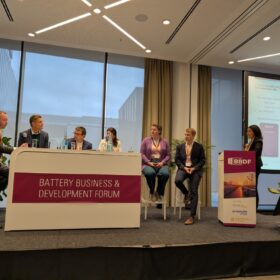
BBDF 2026: How financing standalone vs. co-located projects really works
The “lab” session at Battery Business & Development Forum 2026 made transparent how different stakeholders evaluate and view energy storage projects between standalone and co-located options, and where views diverged.
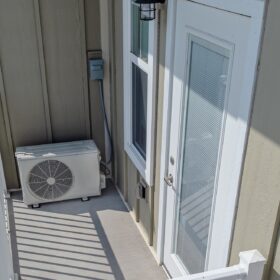
Germany’s heat pump public discourse is positive but volatile
Research from Germany analyzed sentiment in online news coverage to explore how heat pumps are portrayed in German public discourse. It found that while public perception is generally positive, it is neither uniform nor stable, and dipped significantly during debates around Germany’s heating law in 2023.

Can sodium-ion storage drive energy flexibility in France?
France’s Association Environnement Juste has proposed a storage mandate for renewables projects exceeding 10 kWp in order to integrate flexibility at the source. The association argues European sodium-ion batteries could present an economically and environmentally viable solution, capable of stabilizing grids without depending on imported metals.
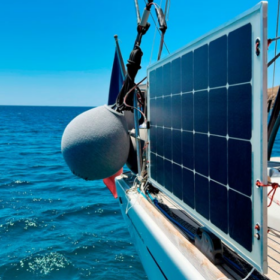
Solbian launches solar kit for boat davits
Available in 80 W and 108 W versions using high-efficiency SunPower Maxeon cells, the kit offers wind resistance up to 25 m/s and easy installation on unused boat surfaces, according to the manufacturer.
