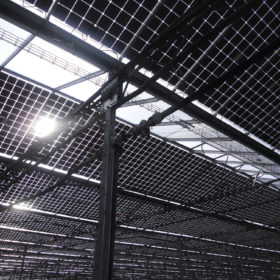
New method to measure energy yield of bifacial PV systems
Canadian scientists have developed a new way to measure the energy yield of bifacial PV systems. They said they considered the spectral albedo of ground cover like snow and sand to predict energy gains of up to 2%, in comparison with the International Electrotechnical Commission (IEC) standard.

Weekend Read: Giga and giga
pv magazine Australia’s Natalie Filatoff reports on the benefits of planning vast solar project pipelines, and the barriers faced by those who dare to dream big.
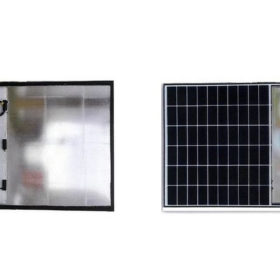
Water jet tech to recover glass from end-of-life solar panels
Japan’s Shintora Kosan has developed a novel water jet technology to recover glass from end-of-life PV modules. It says it can pulverize the solar cells and the backsheets without damaging the glass.

New model to predict safety of floating solar arrays
South Korean scientists have developed a way to determine when a floating PV system is safe to install in the field.
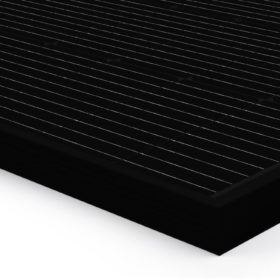
Bisol unveils 21.5%-efficient M10 full-black solar panels for residential use
Bisol’s new products feature a temperature coefficient of -0.34% per degree Celsius and a power rating of 400 W to 420 W. The Slovenian PV module manufacturer said it used M10 wafers for the first time.
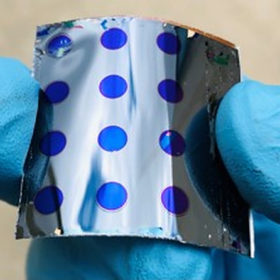
Flexible cadmium telluride solar cell with 12.6% efficiency via lift-off method
A US research team has developed a cadmium telluride (CdTe) solar cell through a lift-off method that reportedly ensures higher crystallinity of the cadmium sulfide film. The device has a power conversion efficiency of 12.60%, an open-circuit voltage of 0.829 V, a short-circuit current density of 23.64 mA/cm2, and a fill factor of 64.30%.
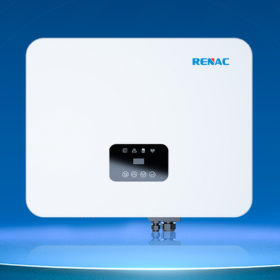
Renac unveils high-voltage hybrid inverters for residential applications
Renac Power’s new hybrid inverters have efficiency ratings of up to 97.5% and European efficiency ratings of 97.2%. They are available in four versions, with power outputs ranging from 3 kW to 6 kW.
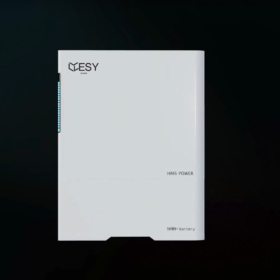
New residential battery inverter solution from China
Esysunhome (ESYSH), a new energy storage company in China, has developed a 5.12 kWh lithium iron phosphate (LFP) battery system with a 7.9 kW inverter. It says six modules can be combined for up to 30.72 kWh of energy storage capacity.
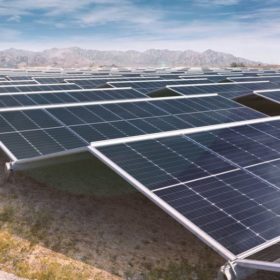
New modular solar solution features cost-cutting ‘slide-together’ system
Green Energy Systems has unveiled a new Australia-made prefabricated modular PV solution for large-scale applications that purportedly offers significant cost reductions by eliminating all stainless-steel nuts, bolts and other traditional fitments in favor of a “slide-together” aluminum junction system.

Agrivoltaics based on light spectrum optimization
US scientists have discovered that using wavelength-selective, semi-transparent PV modules to absorb the blue light spectrum while transmitting red light onto crops can increase crop yield.
