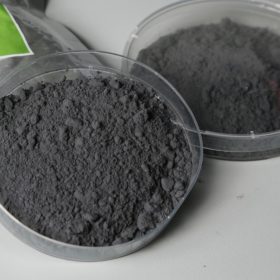
The Hydrogen Stream: Porous silicon material for hydrogen production, storage
EPRO Advance Technology has developed new silicon materials for hydrogen production, while Helmholtz-Zentrum Hereon researchers have shown that hydrogen storage materials can be produced from recycled industrial waste.
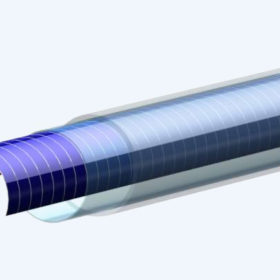
ZSW, Tubesolar achieve 14% efficiency for thin-film agrivoltaic solar tubes
TubeSolar and the Centre for Solar Energy and Hydrogen Research Baden-Württemberg have achieved a power conversion efficiency of 14% for a photovoltaic film based on perovskite.

Tigo unveils rapid shutdown tech for large PV installations
Tigo’s latest product has been certified by Underwriters Laboratories, a US-based testing organization. The company says the new tech can significantly reduce balance of system (BOS) and labor costs.
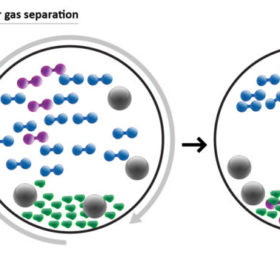
Novel mechanochemical breakthrough for hydrogen storage
Researchers at Deakin University in Australia have discovered a novel way to separate, store and transport large amounts of gas without waste.
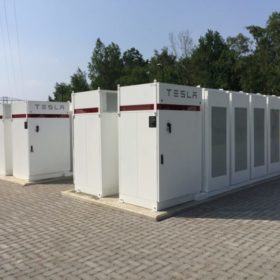
Storage for load shifting viable in several Brazilian states
Greener says that battery storage could help large electricity consumers in Brazil to cope with sharp differences between peak tariffs and off-peak tariffs.

Sodium-ion batteries for EVs, renewables storage
US scientist have developed a new electrolyte design for sodium-ion batteries to improve their long cycling performance. The low-solvation electrolyte was designed for high-voltage sodium-ion batteries, which retained 90% of their capacity after 300 cycles.
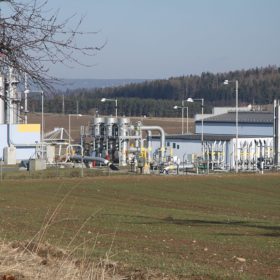
Oil and gas reservoirs are cheapest options for underground hydrogen storage
New research from Ireland shows that depleted oil and gas reservoirs may be used to store hydrogen at a cost of $1.29/kg. According to the researchers, underground hydrogen storage may benefit from the technological maturity of the geologic storage of natural gas and CO2, which are associated with decades of established knowledge.
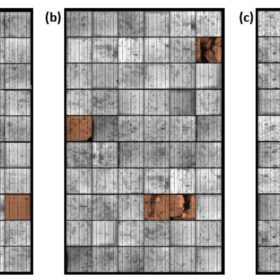
Small cracks have negligible effect on solar cell performance
UK researchers have found that crack percentages of up to 11% have a very limited impact on solar cell performance. They also ascertained that hotspots are likely to arise when the crack percentage is in the range of 11 to 34%.

Heat pumps ‘grossly underestimated’ technology for Australia’s decarbonization
Interest and investment in heat pumps have surged in Europe, but in Australia the technology has struggled to find a serious foothold. Despite the potential, dodgy technology suppliers and schemes gone awry have left a bad taste in Australia’s mouth, CEO Jarrod Leak tells pv magazine Australia

Applying perovskite solar cells onto BIPV steel products
Swansea University will collaborate with Indian multinational Tata Steel to investigate perovskite solar cell materials that could be applied directly onto coated steel to make building-integrated PV components. The partnership will add to an “active buildings” project that the Welsh university has been running for several years.
