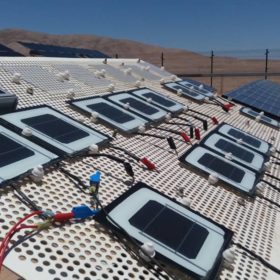
In search of the ‘most rational design’ for anti-reflective coating
Scientists in Spain have tested various properties of anti-reflective and anti-soiling coatings for PV module glass, aiming to develop a material that offers the best balance of desired material properties at the lowest cost. Over a year of testing, the best coatings were shown to boost module output by around 2%, and the group also made several observations that could influence future developments of coatings for PV module front glass.
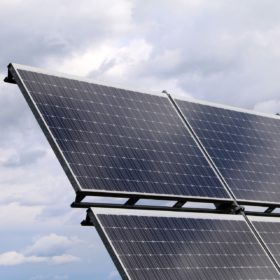
New MPPT algorithm for bidirectional inverter design
A newly proposed inverter design relies on a solar charge controller featuring maximum power point tracking. It is based on an artificial fish-swarm algorithm, which offers high convergence speeds, flexibility, fault tolerance, and accuracy.

Covid-19 weekly round-up: Dormant MiaSole claims Covid support in the US as Indian new solar figures slumped
Plus, analyst WoodMac says a fall in the cost of power generation in Japan during the public health crisis will help drive renewables investment and the Indian government has relaxed borrowing rules for its financially crippled electric utilities.

Global green hydrogen project pipeline reaches 50 GW
International thinktank IEEFA says there are 50 viable green hydrogen projects under development with an estimated renewable energy capacity of 50 GW and the potential to produce 4 million tonnes of the fuel annually.

Wider wind-solar complementarity would mean less need for storage
A study from the Lappeenranta University of Technology states a deeper complementarity between solar and wind generation may favor renewables deployment reducing the need for stronger developments in storage technology. Combining solar with wind more widely could also reduce the need for ramping and improve the reliability of energy supply, say the researchers.

New pathways for tin-monosulfide PV
Scientists in Japan have developed a new process for the fabrication of crystalline tin monosulfide (SnS). By facilitating the growth of crystals measuring up to 24mm in diameter, the process could help overcome some of the challenges to squeezing higher efficiencies out of this cheap, abundant material.
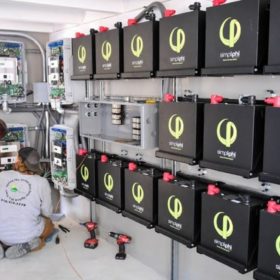
Simpliphi predicts cobalt-free battery takeover sooner than expected
pv magazine spoke with Catherine Von Burg, CEO of the Californian battery company, to discuss why she believes lithium-iron-phosphate is the chemistry of the near future.
Daily news round-up: UK reveals details of next renewables auction, Iran’s first floating PV and more hydrogen
Taiwanese cell manufacturer Inventec Solar reportedly halted production this month and Ireland is preparing to remove rooftop solar panel restrictions, according to the Irish Independent.
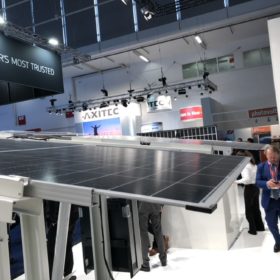
Manufacturing process for mono cast solar cell exceeding 23% efficiency
Trina Solar has made a PV cell by directly applying the unmodified i-TOPCon process, originally developed for Cz mono wafers, to cast n-type quasi-mono silicon wafers. It claims the average efficiency, tested in-house with a calibrated reference cell, is 22.98%.

Solar-powered hydrogen under $2/kg by 2030
Researchers from the Massachusetts Institute of Technology have identified sites where hydrogen could be produced via PV electrolysis at prices ranging from $1.90/kg to $4.20/kg in the United States by the end of the decade.
