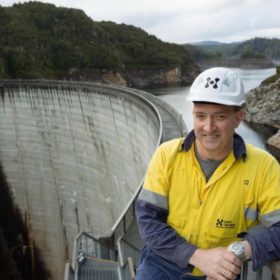
Australia’s Marinus Link interconnector project inches forward following new reports
Tasmania’s ambitions of becoming the “battery of Australia” improved following early reports on the proposed Marinus Link, a second interconnector between the states of Tasmania and Victoria, which show that the project’s economic advantages far outweigh expected costs.

Nice Solar Energy sets new world record for CIGS efficiency
Chinese-German JV Nice Solar Energy has set a new world record of 17.6% efficiency for a CIGS module with a 0.72m² surface. The achievement has been confirmed by German testing organization TÜV Rheinland.

Star Wars’ Death Star with PV modules could surpass global energy needs by 10 times
EOn has calculated the number of PV modules that could theoretically be installed on the Imperial space station from the popular film series. It concluded that even a small version of the station would be able to provide enough solar power to supply 2.5 billion households on Earth.
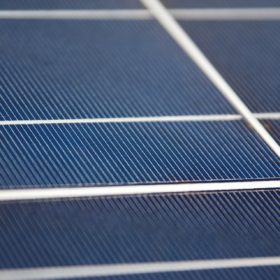
Is it worth increasing cell efficiency? A new metric tells you when
A group of scientists is proposing a new metric – the value of efficiency – to calculate the maximum allowable cost to increase a cell’s efficiency and improve the levelized cost of electricity (LCOE). The researchers expect that more regional diversification may be seen at the global level in the years to come, with the proposed metric offering higher values in North America, Central and Northern Europe, Japan, Australia, and New Zealand.

Construction begins at Hydrogen Park South Australia
The transformation of South Australia’s energy system has taken another step forward with early site works at a green hydrogen facility near Adelaide. The plant will integrate what is billed as Australia’s biggest electrolyzer of its kind.

Ather Energy to set up Li-ion, EV production unit in India
Ather Energy, an Indian electric scooter maker, has signed a memorandum of understanding with the government of the Indian state of Tamil Nadu to open a new production facility for lithium-ion batteries and electric vehicles.

Narrowing down 166 billion battery materials
Researchers at the U.S. Argonne National Laboratory have applied a combination of machine learning and artificial intelligence to help narrow down a list of 166 billion molecules that could be used to form the basis of a battery electrolyte. The technique, say the researchers, offers a way to greatly reduce the cost of narrowing down such an enormous data set, while still providing a precise understanding of each molecule and its likely suitability.
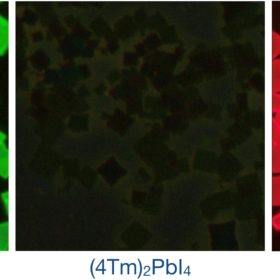
New sandwich-like material for lead-free perovskite solar cells
Scientists from Purdue University claim to have created a new material that incorporates both organic and inorganic materials. Its hybrid structure is said to improve the thermal stability of perovskite PV cells without the need to use lead.
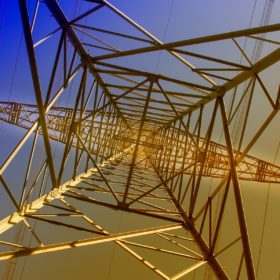
Ofgem’s plan for network charges triggers renewables sector backlash
Ofgem passed its long-awaited, controversial plan for network charges last week, despite earlier warnings against the move. The UK electricity market regulator’s Targeted Charging Review has provoked a backlash in the renewables sector, as many believe that the plan will damage the economics of distributed energy resources and unsubsidized onshore wind and solar development.
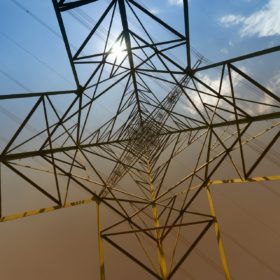
300 MW of new solar for China’s 800 kV UHV transmission project
JinkoSolar has announced that it will supply 300 MW of its Tiger solar panels for what it describes as an ultra-high voltage demonstration plant in China’s Qinghai’s province. The project will be connected to an ultra-high voltage power line that State Grid Corp. of China is building to connect the far northwestern part of the country to the more heavily populated eastern provinces.
