
Solar supporting peacekeeping in DR Congo
A report by the Powering Peace organization states UN missions in the Democratic Republic of Congo could reduce expense and pollution by using off-grid solar to power operations instead of diesel generators. Adding a 200 kW solar system with 200 kW/450 kWh of energy storage would reduce diesel consumption 80% for 10-year savings of almost $2.6 million, states the group.
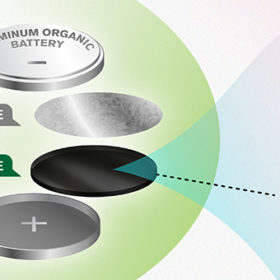
New aluminum batteries for renewables storage
The devices, developed by a European research team, are said to have twice the energy density of conventional aluminum devices. The scientists used a cathode made of anthraquinone, instead of one based on graphene, increasing energy density.

Northern Ireland grid aims to be ready for 95% renewables
The U.K. province’s grid operator SONI has announced a £500 million plan to prepare the network for an almost fully renewable electricity system within just five years. Despite the U.K. being seemingly paralyzed by Brexit, the network operator says it can already cope with 65% clean energy in the mix.
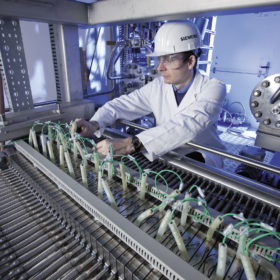
The slow, inexorable rise of green hydrogen
The International Renewable Energy Association says the integration of hydrogen into the energy transition will not happen overnight and electrolysis costs will not be halved until the 2040s. That hydrogen and related products could revolutionize the world energy landscape, however, is not in doubt.

The ballooning potential of curved solar cells
Researchers in the U.S. claim to have developed a manufacturing process based on the use of a latex balloon that could lead to the production of more efficient curved electronic devices, including hemispherical solar cells.

China set for 40 GW of pumped hydro storage next year
The showpiece 3.6 GW Fengning county project which will offer grid services and back-up power at the 2022 Winter Olympics is part of a 31.15 GW construction pipeline of projects, many of which are set to come into service next year.

Tuning titanium in perovskite cells
Scientists from Russia’s NUST MISIS institute and the University of Rome have discovered a two dimensional titanium carbide can improve the performance of a halide perovskite solar cell when added in microscopic amounts across the various cell layers.

Ethiopia’s plans for solar mini grids move forward
The Ethiopian Electric Utility is seeking proposals for 25 mini grid projects which are being backed by the African Development Bank.

Logic supports renewables, not nuclear
The latest edition of the World Nuclear Industry Status Report gives the energy source little hope in the race against fast, widespread, job-friendly, popular renewables. The report reiterates clean power is taking the lead in the world’s energy system and nuclear is not only too costly a remedy for carbon emissions but too slow to deploy. Nuclear output grew only 2.4% last year while solar and wind power volumes grew 18% and 29%, respectively.

New efficiency record for flexible CZTS
Scientists at South Korea’s Daegu Gyeongbuk Institute of Science and Technology have set a new efficiency record of 11.4% for a cell based on a copper zinc tin sulfide thin film applied to a flexible substrate.
