
RES battery prevented complete blackout in the UK
On August 9, a thunderstorm caused 1.5 GW of generation capacity to go offline within seconds in the U.K. The incident caused millions of households to temporarily lose power but the situation could have been considerably worse if not for the country’s battery storage reserves.

Softbank injects another $10m into Swedish dye-sensitized solar specialist Exeger
The Japanese multinational lender is making its second investment in the Swedish start-up. The funds will help the company ship its first products next year.
The weekend read: PV in need of a new chapter for wind
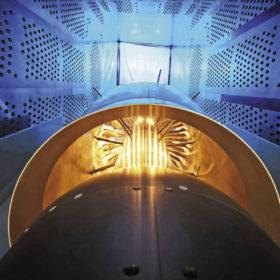
In part two of this feature on wind resilience in the PV industry, the lack of structural codes comes into focus. Weather events, and wind above all, are the most common causes of failure for PV plants. In the United States, the first steps have been taken to catch up with other industries and a dedicated chapter for PV is set to be included in the next update of the American Society of Civil Engineers code. In Europe, no such plans are in place.

Cambodia tender secures lowest solar power price in Southeast Asia
The Asian Development Bank-backed procurement round attracted 26 bidders for the 60 MW project, according to the development lender. The ADB says the low price secured will persuade neighboring governments to embrace auctions.
New metallization process cuts silver demand for modules by 30%
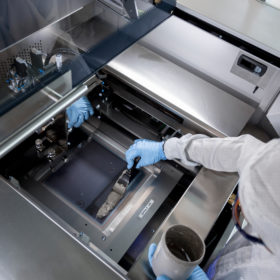
Fraunhofer ISE has worked with German technology companies to improve the metallization process in silicon solar cells. The result could drive down module costs quite a bit.
Solar-plus-storage vs grid enhancement
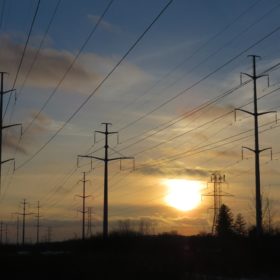
Ontario’s Independent Electricity System Operator will implement a pilot project for a future electricity market based on PV, storage and smart power consumption. The utility says the project will be a cheaper, more efficient alternative to expanding grid infrastructure.

China’s aluminum smelters alone could shift 2.3% of daily electricity demand
German energy agency Dena has found China’s smelter fleet could shift 432.5 GWh of daily demand to more amenable hours to tally with renewables generation. To make it happen though, the regulator needs to lay down rules for providing incentives.
Hydrogen-powered bicycles offer new electromobility concept
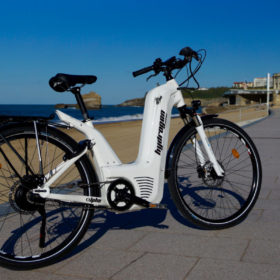
With the 200 hydrogen bikes offered to journalists and world leaders at the G7 summit in Biarritz proving popular, manufacturer Pragma Industries has received an order for 1,000 of them from Chilean president Sebastian Pinera. The company’s founder, Pierre Forté, wants the bike to have a societal impact in developing countries.
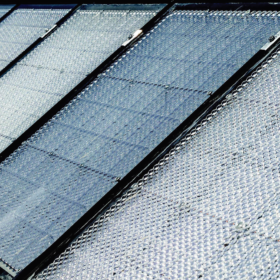
Space age solar solution moves toward production
A consortium of European research institutes has received €10.6 million in EU funding to establish pilot production of a high efficiency module concept developed by Swiss startup Insolight. The module combines high efficiency multijunction cells with a solar concentrator lens and has previously demonstrated 29% efficiency.

German scientists team up for perovskite tandem cells
Two of Germany’s leading research institutes and a CIGS module maker have announced plans to work on the development of perovskite-CIGS tandem cells with a target of producing thin film modules with better than 30% efficiency.
