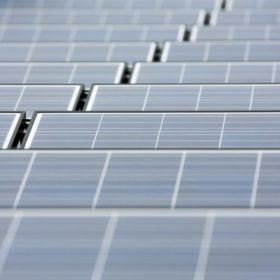
Clustering-based computation used to measure PV module degradation
The method could be an effective tool to measure the performance of solar modules, according to research, due to its ability to speed up the inspection process, preventing further damage and hastening repairs.

China unveils an ambitious new push on grid parity solar
Beijing has outlined a series of policies mandating local and provincial authorities, state-owned banks and grid operators to pull out the stops to drive the rapid escalation of subsidy-free PV projects. The announcement has seen Chinese solar stocks on the rise.

Blockchain system prepares morning croissants under a six-building self-consumption project in France
In Prémian, southern France, a blockchain project developed by Sunchain is providing six consumers with solar power and certifying transactions – which also involve local distribution system operator Enedis.
Canadian-UK funding for pilot smart grid solutions
A competition backed by public funding from the governments of the two nations is seeking proposals for projects that will help electricity grids transition to clean and flexible energy.
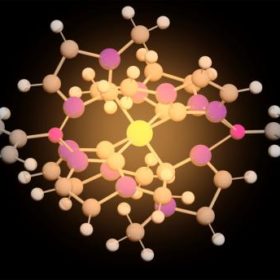
Iron therapy for solar cells
A research team from Sweden has developed a new iron-based molecule, which it says has the potential for further cost reductions in solar cells, and can also function as a photocatalyst to produce fuel.
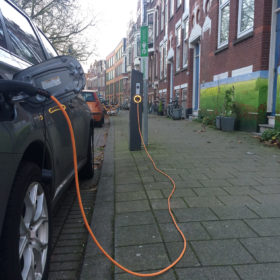
Industry offers cautious welcome as UK government guarantees export payments after all
The Department of Business, Energy and Industrial Strategy has proposed a replacement for the flat rate FIT payment regime that is hard to argue with, as it is linked to the actual amount of electricity exported back into the grid.
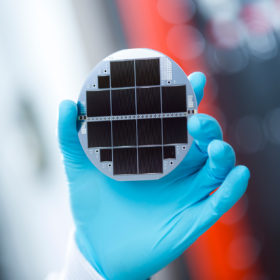
Fraunhofer ISE achieves efficiency record for silicon multi-junction cell
The German institute has achieved another efficiency record for multi-junction solar cells. More cost-effective production methods for III-V-layer cells have also been advanced during work as part of the MehrSi project.
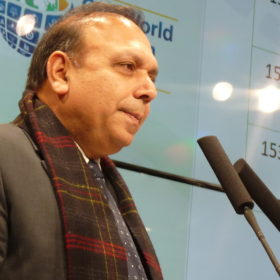
India will tender 500 GW renewable capacity by 2028
Of that colossal sum, 350 GW would be for solar. India currently has installed renewable energy capacity of 75 GW with a further 46 GW under implementation.

Solar climbing the Alps
According to a Swiss research team, PV technology may take advantage of high Alpine regions to increase generation during winter months when electricity is most needed. On snow-covered mountains, solar panels may have a better yield if their placement takes into account high winter irradiance and ground-reflected radiation and steeper-than-usual panel tilt angles.

PV Evolution Labs to go it alone again outside DNV GL
The PV panel testing company has left the fold four years after being acquired by DNV GL. Insiders have stressed the move should not be problematic as PVEL was allowed a degree of independence after it was acquired.
