
Austria could harness 90 TWh of agrivoltaics using 5–16% of cropland
Austrian researchers conducted a techno-economic analysis of agrivoltaic systems and found that 5%–16% of the country’s cropland would be required to meet its solar electricity targets.

New framework promises unprecedented level of cybersecurity for SCADA systems
An international research team developed CyberSentry, a software framework using advanced deep learning and optimization techniques to enhance cybersecurity in SCADA systems for power plants and critical infrastructure. It combines feature selection, hybrid anomaly detection, and dynamic parameter tuning to detect diverse cyberattacks with 99.5% accuracy while minimizing false alarms.
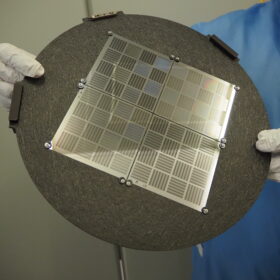
Nanostructured silicon could push solar cells beyond Shockley–Queisser limit
The LEEMONS project is researching nanostructured silicon that uses low-energy electron multiplication (LEEM) to allow one high-energy photon to generate multiple electrons, reducing energy losses in solar cells. By creating ultra-thin amorphous silicon layers inside crystalline silicon via ion implantation, the scientists aim to boost solar cell efficiency beyond the Shockley–Queisser limit while keeping compatibility with existing manufacturing methods.
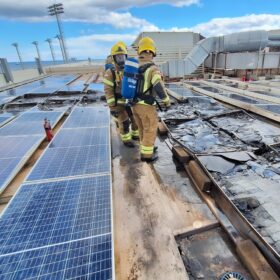
Fire hits PV-equipped sport complex in Gibraltar
Fire caused by an electrical fault from an overheated arcing cable hit the solar panels at Europa Point Stadium in Gibraltar. Firefighters contained and extinguished the blaze within 20 minutes.

Increased spacing between solar module rows boosts agrivoltaics viability
U.S. researchers developed a framework showing that wider spacing between solar PV rows can make agrivoltaic systems economically viable for large-scale mechanized farming. Their simulations in Colorado demonstrated that optimized row spacing maintains crop production while improving combined agricultural and energy revenues.

Japanese researchers achieve world record efficiency of 12.28% for copper gallium selenide solar cell
Researchers in Japan have achieved a 12.28% efficiency in a copper gallium selenide solar cell, the highest reported for indium-free wide-bandgap chalcogenide absorbers in the 1.65–1.75 eV range. The device uses aluminum-engineered films with a back-surface field and optimized cadmium sulfide buffer layers to enhance voltage, reduce recombination, and improve overall performance.
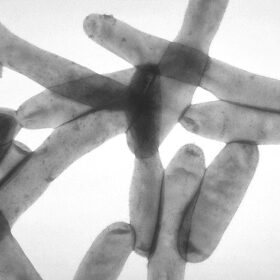
Heat pumps are transforming domestic hot water production – How to avoid hygiene risks?
Heat pumps are increasingly used for domestic hot water in Europe due to their efficiency and compatibility with solar power, but their lower operating temperatures can create conditions where Legionella pneumophila may grow if systems are poorly designed. Proper hydraulic design, temperature control, and periodic thermal disinfection ensure both high efficiency and safe, hygienic operation.

Toshiba rolls out AI-powered solar plant portfolio management platform
Toshiba has unveiled a PV management platform within its Spinex for Energy portfolio that enables real-time monitoring and O&M of multiple solar plants.
The system uses AI to track plant performance, detect faults, calculate capacity and PR metrics, automate reporting, and support troubleshooting.
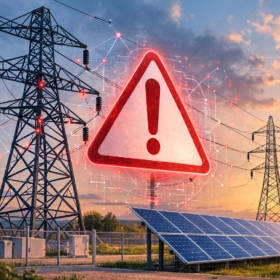
New simulation platform lets energy operators train against realistic cyberattacks
Researchers at Germany’s Fraunhofer FKIE institute developed PowerRange, a virtual simulation platform that helps power grid operators safely test cybersecurity measures and respond to realistic cyberattacks. The platform supports both traditional and renewable grids, offering immersive training across IT, OT, and control systems while highlighting the importance of coordination, communication, and practical defense strategies.

Graphene could improve durability of perovskite solar cells
Nearly 20 years after the first perovskite solar cell was developed, its efficiency and durability are drawing interest from industries worldwide. The defense sector is among the most active, as rising geopolitical tensions drive record government spending to protect critical systems from disruption and attack.
