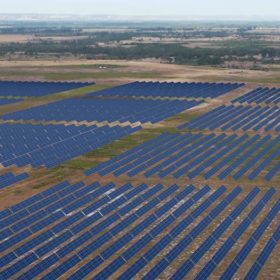
Australian solar park could generate hydrogen for less than $2/kg
A new study shows that hydrogen could be produced for as little as AUD 2.85 ($1.98) per kilogram, supporting Frontier Energy’s plans to make green hydrogen from a 500 MW solar project it is developing in Western Australia.

US fund invests in automated utility-scale solar installation platform
Terabase Energy has raised $44 million in a recent funding round to support digital and robotic platforms for the development of utility-scale solar power plants.

India’s solar pump capacity hits 691.4 MW under subsidies
The Indian government’s PM KUSUM Scheme supports farmers in installing standalone solar pumps and solarizing existing grid-connected agriculture pumps.
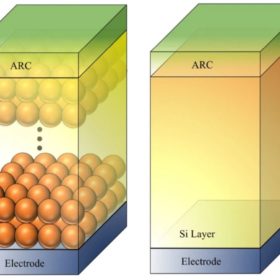
Ultra-thin silicon nanoparticle solar cell with 11% efficiency
Iranian scientists have demonstrated a multi-layer silicon nanoparticle (SNP) solar cell based on nanoparticles that are densely stacked inside a dielectric medium. They considered different SNP structures and configurations to tailor these particles as a p–n junction cell.

World’s largest underground hydrogen storage project
Mitsubishi Power Americas and Magnum Development are set to begin construction on a 300 GWh underground storage facility in the US state of Utah. It will consist of two caverns with capacities of 150 GWh, to store hydrogen generated by an adjacent 840 MW hydrogen-capable gas turbine combined cycle power plant.

Agrivoltaics for rice growth
Scientists in Bangladesh have investigated the potential of agrivoltaics in rice fields. They analyzed the economic viability of bifacial agrivoltaic projects in Vietnam, Bangladesh, China, Egypt, Brazil, and India.
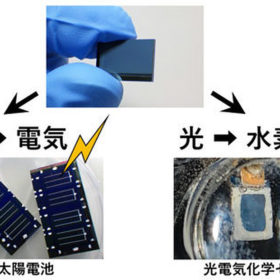
Chalcopyrite solar cell for tandem applications, photocatalytic water splitting
Japanese scientists have built a chalcopyrite PV device for tandem solar cells and water splitting for hydrogen generation. The device has a power conversion efficiency of 11.05%, an open-circuit voltage of 0.960 V, a short-circuit current density of 15.9 mA cm−2, and a fill factor of 72.4%.
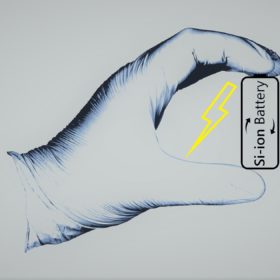
Rechargeable silicon redox battery for renewable energy storage
Israeli researchers have developed a device that combines a reversible Si anode with halide cathodes and uses hybrid electrolytes to enable cell recharging. In the proposed system configuration, silicon is dissolved during the battery discharge process, and upon charging, elemental silicon is deposited.
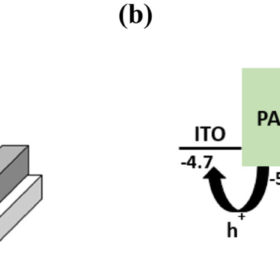
Inverted perovskite solar cell with 16.94% efficiency
A US-Chinese research group has built a perovskite solar cell with a hole-transporting material (HTM) based on conducting polyaniline (PANI) polymer. The device showed significantly higher efficiency than a reference solar cell relying on an HTM made of commonly used PEDOT:PSS.
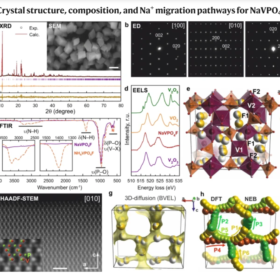
High-voltage sodium-ion batteries with up to 15% higher energy density
Researchers in Russia have developed a new sodium-vanadium phosphate fluoride powder. It has a particular crystal structure that provides superior energy storage capacity in the battery cathode.
