
New photovoltaic tiles from Estonia
Estonian startup Solarstone has developed two solar tiles with an efficiency of up to 19.5% and an operating temperature coefficient of -0.41% per C. It recently secured €10 million in funds to expand sales across Europe.

PEM fuel cell with novel biomimetic design
Spanish scientists developed a proton exchange membrane fuel cell with a bipolar plate based on a nature-inspired structure. This architecture, according to its creators, shows remarkable performance when operating at high relative humidity values of 90%.
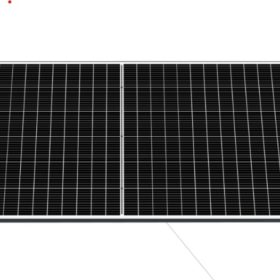
Rayzon unveils 540 W bifacial solar module
The Indian manufacturer said the new panel has a 10-busbar design, a transparent backsheet and a power conversion efficiency of up to 20.98%.
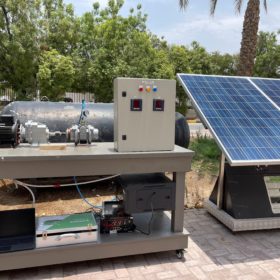
Compressed air storage vs. lead-acid batteries
Researchers in the United Arab Emirates have compared the performance of compressed air storage and lead-acid batteries in terms of energy stored per cubic meter, costs, and payback period. They found the former has a considerably lower Capex and a payback time of only two years.
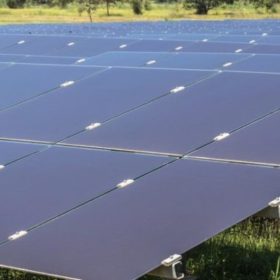
Made-in-USA solar for stable supply chains, lower emissions, fair labor
Toledo Solar founder Aaron Bates joined pv magazine USA to explain the benefits of US-made solar and cadmium telluride technology.

Slovakia restarts rebate program for residential PV, heat pumps
The authorities in Slovakia are offering rebates to cover up to 50% of the cost of buying and installing solar water heaters, PV systems with generation capacities of up to 10 kW, heat pumps, biomass systems, and solar-thermal collectors.

Considerations for solar projects during heat waves
High temperatures can affect different components of PV systems. Inverters can fail, the efficiency of solar modules can decline, and existing cell damage can become worse. However, investors, planners, and operators can adjust to heat waves in a number of different ways.
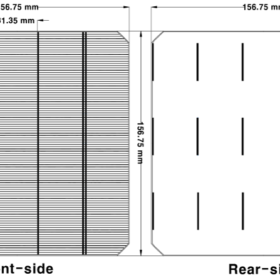
Novel busbar-free cell design for shingled solar modules
South Korean scientists have fabricated a busbar-free solar cell for shingled modules that uses 60% less silver than its busbar counterparts. A module with the new cells had almost the same performance as a reference shingled panel built with a conventional cell design.
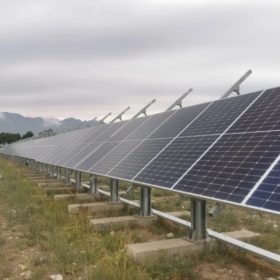
JA Solar reveals results of year-long n-type, p-type tests
JA Solar said that tests have shown that n-type modules have a 3.9% higher power yield than their p-type counterparts. TÜV Nord has confirmed the results.
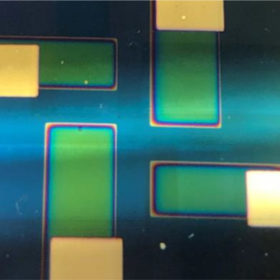
Inverted perovskite solar cell based on polymer-coated steel substrate achieves 16.5% efficiency
Scientists in the Netherlands have built a perovskite solar cell with a polyamide-imide (PAI) planarization layer to serve as an insulating layer. The device has an open-circuit voltage of 1.11 V, a short-circuit current of 19.9 mA cm–2, and a fill factor of 0.75.
