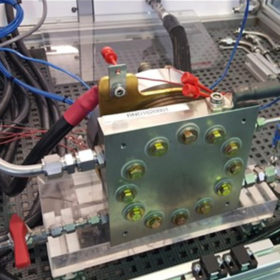
Novel stack design for PEM electrolyzers promises lower production costs
Researchers in Germany have built bipolar plates for electrolyzer stacks without using titanium, which they claim may further reduce green hydrogen costs. They used coated stainless steel and niobium for the stack coating and found these new materials do not affect electrolyzer performance.
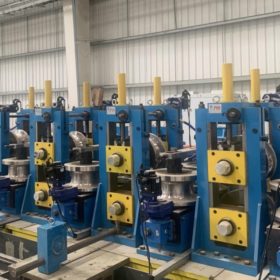
Arctech starts trial operations at 3 GW tracker factory in India
The Chinese company’s new manufacturing facility is equipped with fully automatic production lines and produces all major components for its solar tracker products.
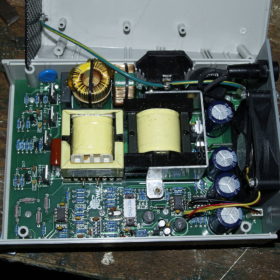
New model for grid-forming inverter operation
Scientists in the United States have developed a new model to allow utilities to use grid-forming inverters in order to better renewable energy intermittency. They described the inverter main circuit representation, the droop control, and the fault current limiting function.
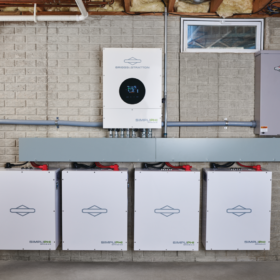
Briggs & Stratton launches residential storage solution with lithium-ferro-phosphate chemistry
The US manufacturer offers the storage solution with a 6 kW inverter, a 4.9 kWh battery, and a proprietary monitoring system.
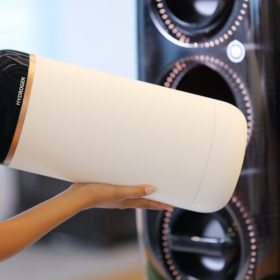
The Hydrogen Stream: Hydrogen cartridges for daily life applications from Toyota
Toyota starts testing hydrogen cartridges for use in mobility, household applications in Shizuoka Prefecture. Meanwhile, China’s Shaanxi Normal University designed an aerogel method to substitute platinum with ruthenium in electrocatalytic water splitting, the US Department of Energy (DOE) is getting closer to fund the Bipartisan Infrastructure Law’s $8 billion program, and UAE-based companies are stepping up cooperation with Azerbaijan, Japan and South Korea.

New tool to increase social acceptance of solar parks
Thanks to a traceability tool, individuals, companies and local authorities who have signed an electricity supply contract with French energy provider Volterres can monitor in real time the source of their electricity supply, and in particular the share of electricity coming directly from renewable energy plants located nearby.

Project to deploy 160 MW solar array on Spanish canal moves forward
The regional administration of Navarra said it is now developing the first 9-km portion of the 198-km solar plant that is planned to be deployed on Spain’s largest artificial irrigation canal network.
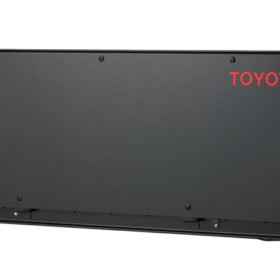
Toyota unveils 8.7 kWh battery for residential applications
The battery has a rated output of 5.5 kW and can be installed in outdoor environments. It is equipped with a hybrid power conditioner, a DC-to-DC converter, and a vehicle power supply adapter with a maximum output of 1.1 kWh.

Silver-alloyed CIGS solar cell with transparent indium back contacts, 12% efficiency
Scientists in Sweden have developed a wide-gap ACIGS solar cell with hydrogen-doped indium oxide (IOH) transparent back contacts and silver alloying to increase the absorber bandgap energy. The device achieved an efficiency of 12.0%, an open-circuit voltage of 835 mV, a short-circuit current of 22.1 mA cm2, and a fill factor of 65.2%.
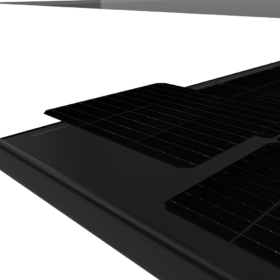
Solar module with frameless front side, improved drainage function
Chinese panel maker DAH Solar has developed a rooftop PV module with a new design that is claimed to enable water to wash away dust without the need for manual cleaning operations. The panel is offered in five versions with power output ranging from 450 W to 470 W and efficiency spanning from 20.85% and 21.78%.
