The case for aqueous zinc-ion batteries
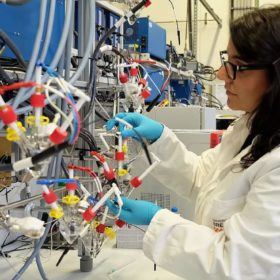
Scientists in Germany have identified the main challenges that are preventing aqueous zinc-ion batteries (ZIBs) from becoming a mainstream storage technology for power grid applications. According to their analysis, the two main hurdles that must be overcome in future research are the increase of the specific energy of the full Zn-ion cell and the prevention of the parasitic hydrogen evolution reaction occurring during the Zn electrodeposition step.

Photoluminescent solar PV for greenhouses
Heliene, a solar panel manufacturer, and UbiQD entered a joint development agreement for light-optimizing, energy-producing modules designed to top agrivoltaic greenhouses.
Australian flow battery maker eyes largest install to date after inking US deal
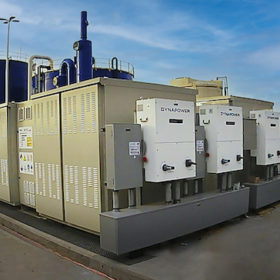
Australian redox flow battery manufacturer Redflow’s push into the United States market has received a major boost with the company announcing it will work with California-based biowaste technology firm Anaergia on the installation of a solar and 5.5-6MWh battery energy storage solution.
Semi-transparent organic photovoltaic filters for agrivoltaic greenhouses
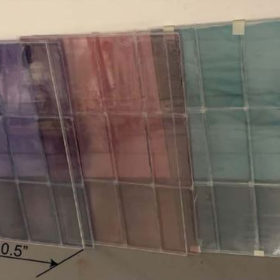
Researchers in the United States have tested organic photovoltaic filters in a greenhouse hosting lettuce growth and have found the devices’ transmission spectra may help fine-tune the characteristics of the plant. They used transcriptomic analysis to assess the key modifications of the plants grown under the solar filters.
Sweden’s first rock cavern for green hydrogen storage takes shape
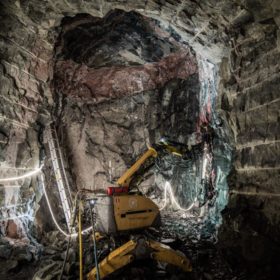
Vattenfall, SSAB and LKAB have reached the halfway point in the construction of a rock cavern storage facility in a coastal city in northern Sweden. The 100-cubic-meter facility is being constructed 30 meters below ground and will begin storing green hydrogen next year.
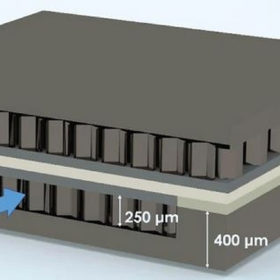
Monolithic fuel cell with power density of 5.6kW/L
An international research group has developed a solid oxide fuel cell that may be used in vehicles. The monolith device has an active cell area of around 18 cm2 and was built through common manufacturing processes. It was found to achieve a high power density of 5.6 kW/L, which the scientists said is comparable with that of the best performing fuel cells based on ceramic anodes.

The mobility rEVolution: Maserati plans market launch of its electric GranTurismo Folgore
In other news, Ford has accelerated its EV push in Europe with seven new models, Samsung SDI is building a pilot line for solid state batteries, Northvolt is planning its third battery gigafactory in northern Germany, whereas Porsche has unveiled new electrification plans.
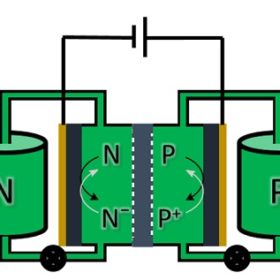
Symmetric redox flow battery based on Blatter radicals
A Dutch-Danish research group has provided a proof of concept for the use of Blatter radicals in electrochemical energy-storage applications. It tested these compounds in a small electrochemical cell that was found to remain stable over 275 charge/discharge cycles.
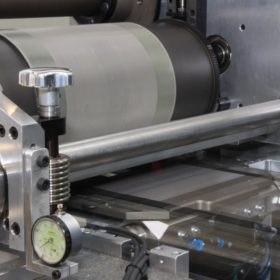
Demonstrator machine for high-throughput solar cell metallization
Developed by Germany’s Fraunhofer Institute for Solar Energy Systems ISE and ASYS Automatisierungssysteme GmbH, the new machine is claimed to increase the print process throughput by a factor of 1.5.
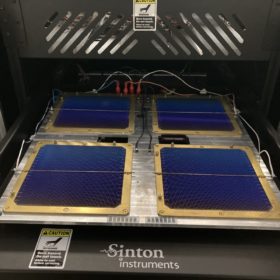
The Solar Tech Check: Toward 50-year modules, and how the numbers add up for HJT
This week sees new technoeconomic analysis published on different aspects/materials for heterojunction: Important to consider as Europe in particular looks to be betting big on this technology for its manufacturing comeback. And a new report from NREL in the United States examines progress in degradation and durability to increase module lifetimes.
