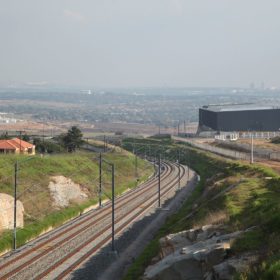
Solar for train traction in South Africa
The Development Bank of South Africa (DBSA) is seeking consultants for the deployment of 3MW of solar capacity to supply power to the traction system and some stations of the Gautrain system – an 80km railway in Gauteng linking Johannesburg, Pretoria, Ekurhuleni, and the O.R. Tambo International Airport.
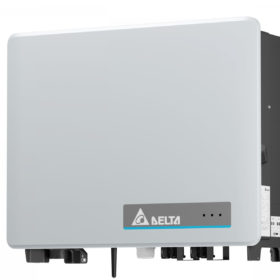
Delta launches new solar inverter series for residential, commercial PV
The new solar inverter series can achieve maximum efficiency of 98.7% and a European efficiency rating of 98.5%. Its rated power ranges from 15 to 20kW.
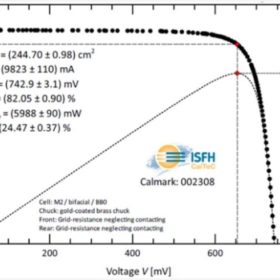
Enel, CEA achieve 24.47% efficiency in gallium-doped p-type heterojunction solar cell
Manufactured with wafers provided by Chinese PV producer Longi, the industrial-sized cells are able to provide a fill factor of 82.05%.
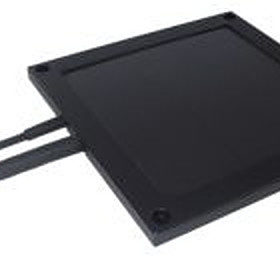
Large-area reference solar cell for high precision measurements
Germany’s Institute for Solar Energy Research (ISFH) has partnered with engineering company Mencke und Tegtmeyer GmbH (IB-MuT) to develop a large-area reference solar cell for high precision cell measurements. The BigRef device is claimed to be the only rugged encapsulated large-area reference solar cell available on the market.
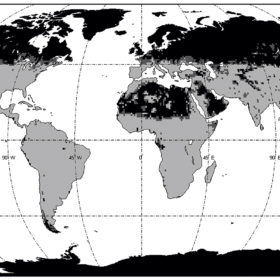
Creative thinking for vertical east-west bifacial PV projects
A Finnish-Norwegian research group has assessed the global potential of vertical east-west bifacial PV (VBPV) projects and found that these installations may provide a low LCOE at Nordic latitudes, in Central Europe and subtropical desert areas. The researchers also found that residential and commercial VBPV systems are a grid-friendly solution for low-voltage networks when compared to monofacial arrays.
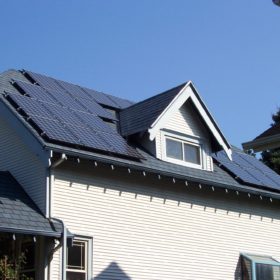
Belgium extends VAT reduction for residential PV, heat pumps
Belgium’s federal government has decided to reduce to 6% the VAT on PV systems and heat pumps deployed on buildings erected over the past ten years. This measure was previously applied only to projects developed on buildings that were more than ten years old.
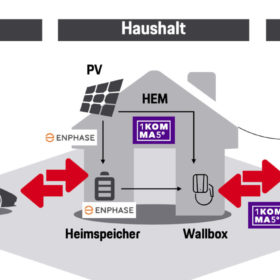
1Komma5°, Enphase plan European virtual power plant relying on solar, storage, heat pumps and EV recharging
Through a strategic partnership, the two companies want to equip 1.5 million buildings in Europe with photovoltaics, storage systems, recharging solutions for electric vehicles, and heat pumps by 2030.
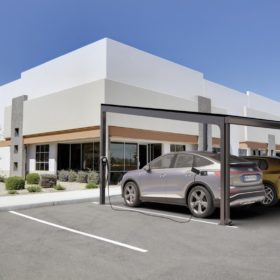
New solar carport solution from France
The PowerPark carport is equipped with 5.6kW of monocrystalline modules and one or more WallBox charging stations for hybrid or electric vehicles. French company Aterno is selling the system, starting from €19,900 – excluding VAT – depending on the project configuration.
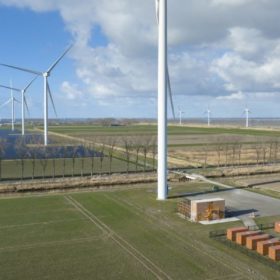
Vattenfall energizes hybrid wind-solar-storage plant in the Netherlands
The Haringvliet energy park consists of a 38MW solar facility a 22MW wind power complex and 12 battery containers. The three systems share the same grid connection.
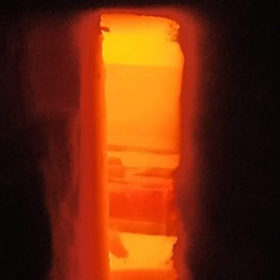
Latent heat thermophotovoltaic battery for renewables storage
Developed by researchers in Spain, the battery uses renewable electricity to melt low-cost metals such as silicon or ferrosilicon alloys to produce and store latent heat, which is in turn used by a thermophovoltaic generator to produce power. According to its creators, the device may store electricity at a cost of €10 per kilowatt-hour for a 10MWh system.
