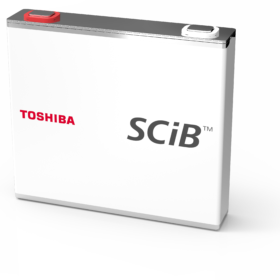
Toshiba launches 20Ah rechargeable lithium-ion battery
Toshiba has developed a battery that can be used with PV modules, with a design that charges and discharges at high currents. The new 20Ah-HP SCiB product has a rated capacity of 20Ah, a nominal voltage of 2.3V, and an input power of 1,900W. It measures 116 mm x 22 mm x 106 mm and weighs 545 grams.

The weekend read: V2G driving grid changes
The uptake of EVs in the years ahead will add up to staggering battery capacity, mostly sitting idle on driveways. The two-way flow of electricity from EV batteries, known as vehicle to grid, could not only enable power systems to rely on intermittent renewables, but could also be the trump card for network operators to respond to grid disturbances. However, there are still a few catches to be worked out, as Marija Maisch explains.
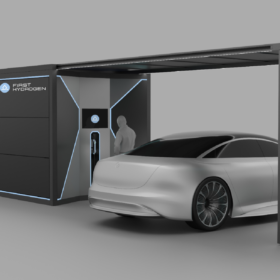
The Hydrogen Stream: Hydrogen refueling stations for automotive market
Canada’s First Hydrogen and German consulting firm FEV are developing a hydrogen fueling station for remote locations where there are no electrical power grids available. Furthermore, Japan and Indonesia have started to cooperate on hydrogen and carbon capture technologies and the UK gas grid is set to start blending hydrogen around the country from next year.

Chinese PV Industry Brief: JinkoSolar announces Jiangxi Jinko’s IPO pricing
Jiangxi Jinko plans to issue 2 billion shares at RMB5.00 per share and expects to raise net proceeds of around RMB 10.0 million. Solar manufacturer Solargiga said it expects a 17% revenue growth for 2021.
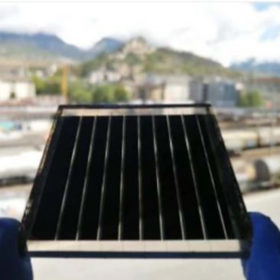
Perovskite solar module with 21.36% efficiency via new passivation tech
Lithuanian scientists built the panel with 23.9% efficient solar cells with operational stability of over 1000 h. The module has an active area of 26 cm2.
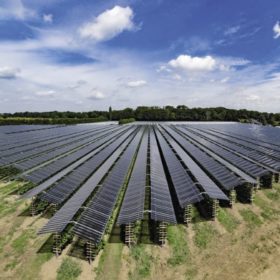
Israel launches tender for 100 MW of agrivoltaics
Selected projects will be awarded a fixed tariff of ILS 0.2091 ($0.06.708)/kWh over a 23-year period.
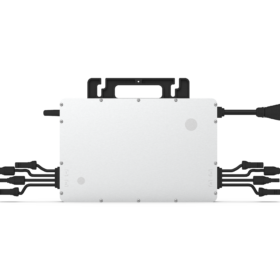
Micro-inverter for high-power solar panels from Hoymiles
The device has a 4-in-1 design, which means it can be connected with four solar panels with a power output of up to 625 W each, through four independent connections. The output of each panel is tracked and converted individually. According to the Chinese manufacturer, the micro-inverter can ensure savings of up to 50% due to the lower number of devices and cables needed.
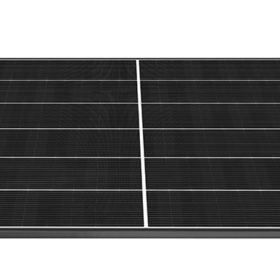
Panasonic unveils 410 W solar panel with 22.2% efficiency
The new heterojunction module series is compatible with Panasonic’s Evervolt battery and has a power output ranging from 400 to 410 W. It also features a temperature coefficient of -0.26% per degree Celsius.

NREL’s online tool to assess viability of geothermal heat pumps
The research institute has upgraded its REopt web tool to include ground-source heat pump technologies. US homeowners will now be able to simulate the impact of converting conventional heating and cooling systems to geothermal heat pumps.

All solar is equal, but rooftop solar is more equal
Cornell Researchers have found that upstate New Yorkers prefer rooftop solar to community solar under 50 acres, but opinions are split 50/50 over large-scale ground mounts. The distaste for utility-scale solar is strongest when converting forests, public land and productive farmland.
