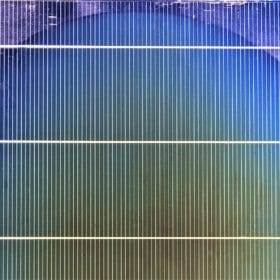
Simplifying solar cell deposition
Scientists in Germany have developed a new process for deposition of silicon dioxide layers during cell production. Without the need for high pressure, flammable gases, or vacuum conditions, the process could lead to cost reductions for cell manufacturers, provided it can be developed and applied in a large-scale production setting.
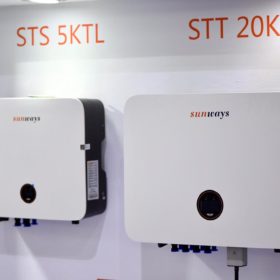
Sunport claims to have reconciled back-contact and bifacial conundrum
The metal wrap-through-focused module maker revealed its M series at the SNEC solar conference in Shanghai, claiming a bifacial rate of up to 70%.
The Hydrogen Stream: 2.7 GW of operational electrolyzer capacity expected for Europe by 2025
According to two new pieces of research, Europe is on track to reach 2.7 GW of operational hydrogen electrolyzer capacity by 2025 and most of this capacity is expected to be located in Germany. Furthermore, three European gas associations have assessed the competitiveness of the different transportation options for hydrogen and have found it depends on the distance over which hydrogen is transported, as well as on scale and end-use.
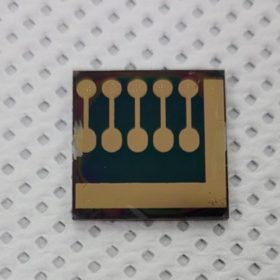
Perovskite solar cell with 19.1% efficiency via CO2 doping
Thanks to a carbon dioxide doping technique, the solar cell interlayers exhibited conductivity around five times higher than that of a perovskite cell based on interlayers doped with oxygen. The device also showed an open-circuit voltage of 1.14 V, a short-circuit current density of 21.2 mA cm2 and a fill factor of 0.79.

Smart sticker for smart solar modules
The sticker is based on a blockchain technology developed by German start-up Authentic Network. Meyer Burger uses the application for the photovoltaic modules it produces in its new factory that opened in Freiberg at the end of May.
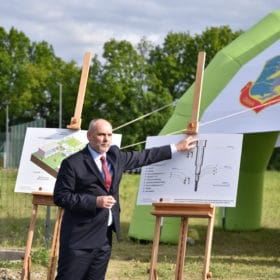
Photovoltaics, heat pumps to rescue failed geothermal project in Poland
The Polish government is supporting a hybrid renewable energy project based on a deep-borehole heat exchanger (DBHE) whose heat pumps are powered by photovoltaics. The heat generated by the facility will be used for district heating.
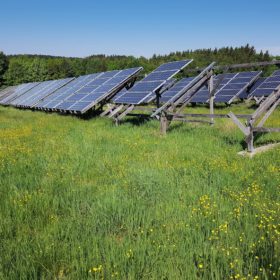
Computational model for agrivoltaics
A U.S. scientist has developed a computational framework that assesses how well a hypothetical agrivoltaic project would perform in achieving desired outcomes such as the volume of PV electricity produced, and energy-to-agriculture. The method considers the high-frequency decomposition of solar irradiance into multiple rays and analyzes how these rays are propagated forward in time, to assess multiple reflections and absorption for various system configurations. It also takes into account panel inclination, panel refractive indices, sizes, shapes, heights, and albedo.
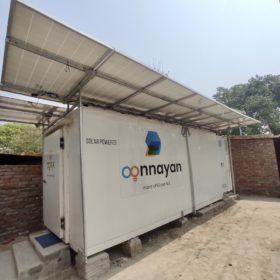
Solar-powered cold storage service
Small farmers in the Indian state of Bihar are making productive use of solar energy to reduce their losses and increase their income, thanks to an innovative pay-per-use cooling service for perishable produce.
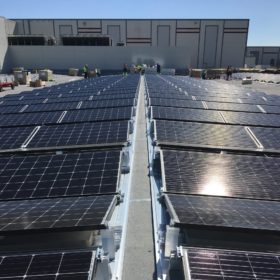
PV modules degrade less in Nordic climates
Norwegian researchers have used a year-on-year approach, considering the combined effect of temperature, humidity, and ultraviolet irradiation, to assess the degradation rate of polycrystalline modules with a temperature coefficient of -0.43%, mounted with an approximately 10-degree tilt, and located in eastern Norway. They found that these modules degrade in the range in the range of 0.1-0.19% per year, which is 0.4% less than panels operating in other climates.
Chinese court upholds laminator patent
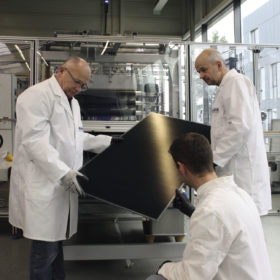
German manufacturer Robert Bürkle GmbH has obtained a first instance judgement preventing a rival company from producing equipment that infringes on its patents. The decision of the Intermediate Peoples Court in China is not yet final, and the rival company has already filed a complaint against the ruling.
