
Demand, policies, investment key to green hydrogen development
Ruchi Gupta is a research fellow at the University of Geneva’s Institute for Environmental Sciences. She focuses on how flexibility options, such as sector coupling with hydrogen production, can support renewable energy integration and decarbonize a wide range of sectors.

Deploying solar on bridges
A bridge crossing the Pò river in San Mauro Torinese, in northern Italy, is set to host a 300m long PV system designed to rely on special mounting structures and full-black modules. The local administration said the bridge was chosen as the rooftops and surfaces available are all located in landscape protection areas adjacent to the town’s most important historic building.

Organic solar cell with 18.4% efficiency via new electrode coating
Saudi scientists built the cell’s electrode with a hole-transporting molecule called Br-2PACz and not with the commonly used PEDOT:PSS. It helped improve the photovoltaic cell efficiency by around 0.9%.

NanoGraf unveils new battery chemistry materials
NanoGra’s silicon-oxide anode material can increase battery capacity in the 18650 form factor by an initial 12% at commercially competitive prices.

Industrial green hydrogen could become a global commodity but local production is needed for transport uses
Long distance, point-to-point transport of green hydrogen for industrial use can harness the cheap solar electricity available in some parts of the world but distributing the energy-storage gas to individual refueling stations, for vehicle fuel cell use, will likely have to depend on production nearby.
Gravity-based storage for distributed solar
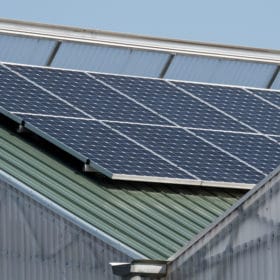
An international research team has designed a residential solar-plus-storage system based on gravity. The system was built with a solar power generator, a bulk booster charge controller, an inverter, a solenoid device, a deep cycle battery, a pulley block, a geared motor, a microcontroller, and wire ropes. Its creators said the system is ideal for regions with high solar radiation. They found that, due to its high electrical requirements, the system needs to rely on high-power solar modules with an output of over 500 W.

New tool aims to streamline fast-charging EV station design
A new project offers a design and validation framework for renewables-based microgrid configurations that deliver electric vehicle fast charging, energy security, and value-added grid services.

Scotland announces massive plan for heat pump deployment
The Scottish government wants to deploy renewable-powered heat pumps on at least 1 million homes and 50,000 non-domestic buildings by the end of this decade. For this purpose, it has created an advisory group and is now seeking to gather all potential stakeholders.

Photovoltaics and geothermal heat pumps for domestic hot water heating
According to a new study from LUT University, domestic water heating costs may be reduced by combining rooftop PV with geothermal heat pumps. Scientists developed a control method to minimize these costs by taking advantage of cheap spot market electricity and maximized PV power generation, as well as considering heat demand, PV generation forecasts, and heat pump efficiency.
Takeaways from the PVEL 2021 reliability scorecard
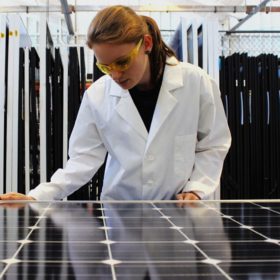
The annual publication from PV Evolution Labs shares results from solar panel stress tests focused on specified and verified bills of materials.
