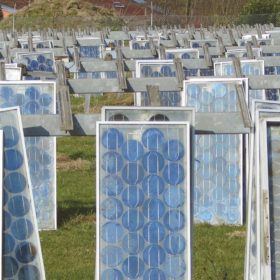
India could have 2.95bn tons of solar waste by 2047
Researchers led by the Indian Institute of Technology Delhi have projected the waste expected from end-of-life solar panels and related components. They assumed 347.5 GW of total installed solar generation capacity would be reached this decade. The academics said the waste would include critical metals worth around $645 trillion, 70% of which could be recovered.
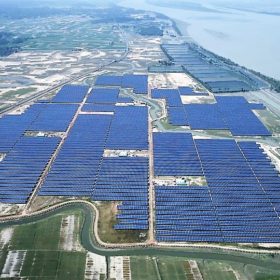
Minister highlights Bangladesh’s lack of land for solar
Junior power minister Nasrul Hamid, speaking at a signing ceremony for a planned 100 MW project, warned technology would have to develop to require less surface area for solar modules, although he did say Dhaka would fund research into rooftop solar.

CEA-Ines achieves 19.2% efficiency for flexible perovskite solar cell
The cell was fabricated with a flexible substrate made of indium tin oxide (ITO) and polyethylene terephthalate (PET). The device was tested through a damp heat test and showed it can retain around 90% of its initial efficiency after 800 hours.
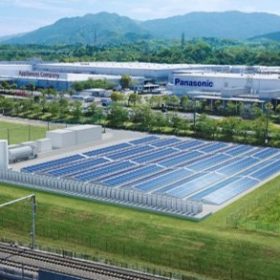
Panasonic combines hydrogen fuel cell generators with PV and storage
The pilot project is combining hydrogen fuel cell generators with a combined capacity of 500 kW with a 570 kW solar array and 1.1 MWh of lithium-ion batteries. It is planned to come online in the spring of 2022.

Water-free, portable cleaning bot for rooftop solar
India’s Aegeus Technologies has developed an autonomous, water-free cleaning bot for rooftop solar installations. The bot weighs 5 kg (with battery) and can be operated remotely through a web-based app. It uses an air wash technology to clean the panels, ensuring no need for water or any harmful chemicals.
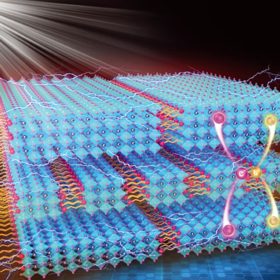
Sandwich structure of quasi-2D perovskite film nourishes next-gen solar development
Even as solar researchers strive to squeeze every drop of efficiency from the industry-ruling silicon solar-cell technology, scientists are constantly questing for the next, cheaper, more efficient way of harvesting the sun’s energy to power human endeavours. The appetite for accelerating 2D perovskite solar cell development has just been piqued!

Next2Sun unveils bifacial photovoltaic fence
The solar fence has an output of 400 W per fence section. It is built with heterojunction or n-type PERT bifacial cells developed by the German start-up and relies on its vertical mounting technology for bifacial photovoltaic panels.

TCO-free heterojunction silicon solar cell with 22% efficiency
The cell was built with a phosphorus-doped n-type Czochralski (Cz) silicon wafer with a resistivity of 1.09Ωcm and a thickness of 170mm. Ti/Au/Ag metal stacks were used for the contact with the hydrogenated amorphous silicon (a-Si:H) layers.
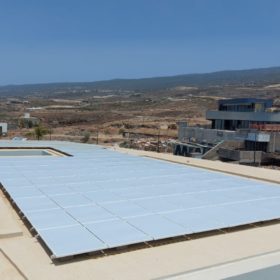
The panel in white
Slovenian solar module manufacturer Bisol has developed a white panel with a power output of 190 W. The product is claimed to be an ideal solution for seamlessly blending with large surface buildings and maintaining their historic character.

Hybrid wind-solar could make green ammonia cost-competitive in niche markets by 2030
According to a new study from the LUT University, hybrid wind-solar plants offer the ideal profile to reduce the costs of green ammonia. Although natural gas will be able to provide lower prices over this and the next decade, beyond 2040 ammonia generated by wind and solar may reach a price of between €300 and €330 per ton.
