
Chinese PV Industry Brief: Trina shipped 10.5 GW of modules in H1
Moreover, the Chint group said its PV plant fleet in China has reached a combined capacity of 6.54 GW and project developer China Shuifa Singyes said high polysilicon prices and Covid restrictions had caused a revenue drop.
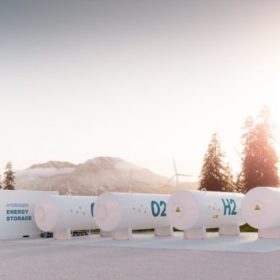
The Hydrogen Stream: 2 GW green hydrogen project in Chile, new push from South Korea
Furthermore, the Indian government is proposing to mandate using green hydrogen in fertilizer and refining and Japanese automotive manufacturer Toyota wants to assemble integrated dual fuel cell (FC) modules in the United States.

Cheapest long-duration storage for systems with high renewables
National Renewable Energy Laboratory researchers have studied which tech offers the lowest levelized cost of energy to provide the US Western Interconnection grid with electricity when wind and solar are not available. They assumed 85% renewables penetration and determined that geologic hydrogen storage and natural gas combined-cycle plants with carbon capture storage are the cheapest options for 120-hour discharge applications.

Photovoltaic sunshade based on perovskite solar cells
The phovoltaic sunshade was deployed on the facade of a factory owned by Polish aluminum system provider Aliplast. The movement of the PV blinds is regulated by a controlling system linked to a weather station installed on the roof.

German researchers want to reduce manufacturing costs for electrolysers by more than 25%
A number of Fraunhofer institutes in Germany want to make green hydrogen more cost-competitive and are working to identify the best and most economical processes for the production of electrolyzers. They intend to build a digital library of future-proof electrolyser manufacturing processes with which the investment costs and even the return on investment can be determined in advance depending on the planned production volume.

Spanish consortium wants to simplify hydrogen production through photoelectrocatalysis
Spanish energy giants Repsol and Enagás are planning to build an electrolyzer based on photoelectrocatalysis at an industrial complex owned by the oil company in Puertollano in 2024. The device receives direct solar radiation and with a photoactive material it generates the electrical charges that cause the separation of the water molecule into hydrogen and oxygen.
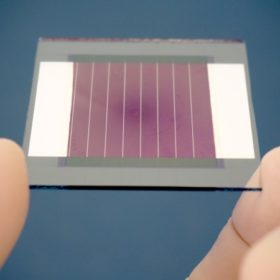
Mini organic solar module with 13.94% efficiency
The panel is based on 14.9%-efficient organic PV cells with a surface of 1.1 cm2 that the same research group unveiled in September 2020. The solar cells were interconnected using laser structuring.
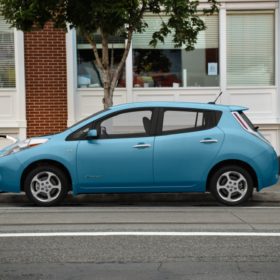
US company using 3D printers to make solid-state battery tech for EVs
California-based Sakuú Corp. has started work on a 2.5 MWh per year pilot facility to produce 3D-printed solid-state battery tech.
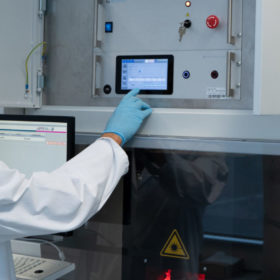
Fraunhofer CSP develops repair process for PERC solar cells
The performance of the solar cell contacts can be improved with laser-assisted current treatment. The process does not damage the solar cells but only optimizes faulty semiconductor-metal contacts.
Increasing volumes for PV module recycling in Brazil
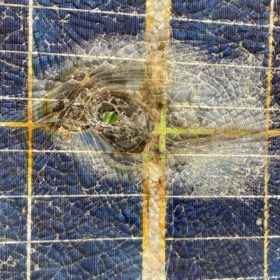
Brazilan PV module recycling specialist SunR has already recycled 30 tons of panels and expects to receive another 125 tons. According to its CEO, demand for recycled panels, especially broken panels, has increased considerably in recent years.
