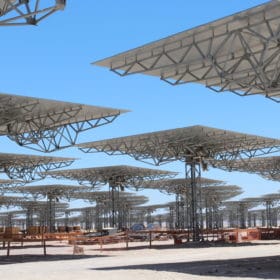
Hybrid PV-CSP has a lower LCOE than gas in Chile
Researchers from the Center for Solar Energy Technologies of Fraunhofer Chile have conducted a comparative analysis which shows that the lowest levelized cost of energy (LCOE ) in Chile can be achieved by a combination of large scale PV and concentrated solar power (CSP).
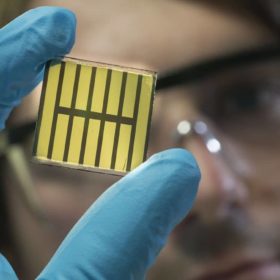
New process to assess quality of perovskite semiconductors
According to German scientists, the quality of the photoluminescence quantum yield of the perovskite layers can be reliably and precisely determined for the first time. It shows that the promising material has more potential for optimization than previously assumed.
More EU cash for green hydrogen
The sustainable gas is among ten areas of research and innovation which would benefit from backing by the bloc, member states and industry, if a new European Commission proposal is adopted.
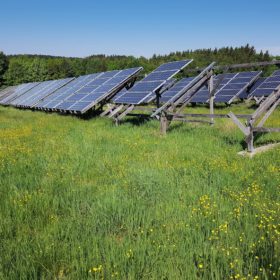
Agrivoltaics have an average LCOE of €0.093 per kWh in Germany
According to new guidelines by Germany’s Fraunhofer ISE, agrivoltaic projects are already competitive with other renewable energy sources today. The lack of a proper regulatory framework, however, is currently preventing the dual use of arable land for food production and power generation from becoming a mainstream solution.
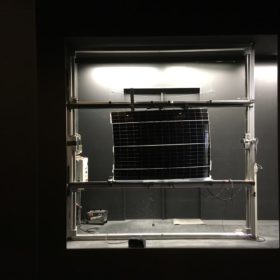
Vehicle-integrated PV reduces EV charging time in sunny regions by 40%
Dutch scientist Bonna Newmann spoke with pv magazine about the present and future of vehicle-integrated PV from a technological and economic perspective. Solar panels installed on cars could have a payback time of only three or four years and ensure 10,000 km of pure PV-generated road travel per year, she said. Furthermore, if you live in a sunny place, you can drive an electric car with solar panels for weeks during summertime, without the need for recharging, she pointed out.
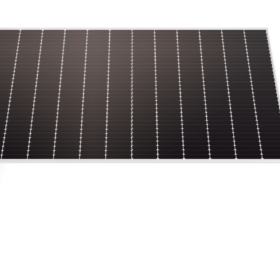
New shingled PERC solar module from Hyundai
The South Korean manufacturer has brought, to Europe and Australia, its recently launched shingled PERC panel, with an output ranging from 470 to 480 W and an efficiency of up to 20.5%. The products come with a 25-year linear power output guarantee and a 25-year product guarantee.
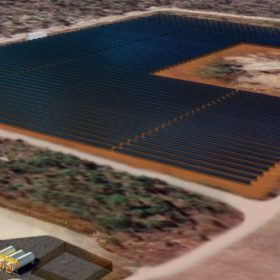
Hybrid solar to revitalize former mining town in northern Australia
In the middle of Australia’s most iconic natural landscape, the township of Jabiru has begun its transition from a uranium-mine support community, to an Indigenous cultural hub and tourism center. The local arm of German renewable energy pioneer, juwi, brings its deep experience in off-grid power systems to the project.
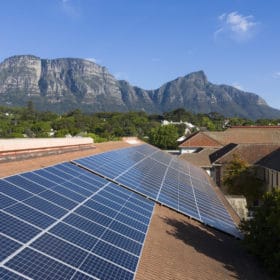
Storage and PAYG critical to deployment of African off-grid renewables
The former need not necessarily relate to conventional lithium-ion batteries, however, as a recent webinar staged by Solarpower Europe and EU body GET.invest discovered.
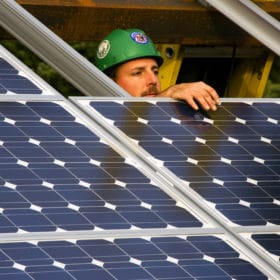
Improving algorithms to help solar project developers avoid the NIMBY effect
A research group in the United States is proposing to add social variables in GIS-MCDA algorithms for PV project planning as a solution to avoid opposition to large scale solar from local communities. Although some efforts have already been made in this direction, there is still much to be done to understand the degree to which measuring these variables proactively could help mitigate public opposition down the line, on individual projects.
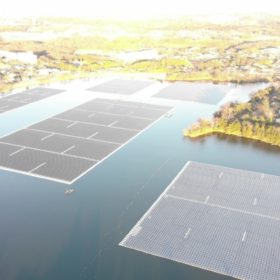
Japan’s largest floating PV plant being reconstructed after Typhoon impact
French floating PV specialist Ciel&Terre said the plant is being split into smaller islands, with a square shape, to avoid stress concentration.
