
Solar noise barriers require high self-consumption rates
Dutch contractor Heijmans has deployed a solar noise barrier to test three different PV module technologies, including cadmium telluride, CIGS, and crystalline products. Initial analysis has shown unexpectedly low returns, due to the rates at which the installation is selling power to the grid. But high levels of self-consumption could make such designs competitive with conventional noise barriers.

Batteries and hydrogen to make residential off-grid PV technically feasible
Researchers in Finland have demonstrated the technical feasibility of an off-grid residential PV system combined with short-term battery storage and seasonal hydrogen storage. The proposed model is applicable only to northern climates, as higher levels of solar radiation in southern locations would mean a reduced need for seasonal storage. It was tested in an existing single-family house in Finland with a 21 kW rooftop array and a ground source 6 kW heat pump.
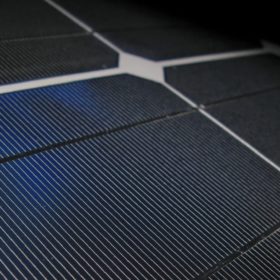
Water harvesting tech for PV panel cleaning and cooling
An international research team has proposed to use nighttime radiative cooling to harvest water from PV panels and reuse it for module cleaning during the daytime. According to their findings, the proposed system has, also, a beneficial effect on the modules’ operating temperature.
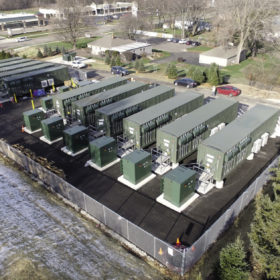
Australia’s battery energy storage pipeline at 7 GW
Cornwall Insight estimates Australia’s energy storage pipeline at 7 GW, although most of that capacity is still in the proposal phase. More than 900 MW of storage will be built by 2024 – far more than the market operator’s 2020 forecast.
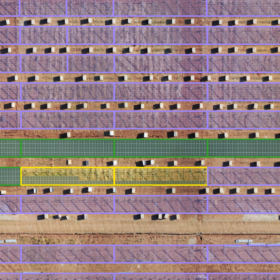
Digital tool to monitor PV plant construction
U.K.-based Above has developed a digital approach to unifying PV plant testing and inspection data. The company said the new tool can create a permanent digital record for the future.
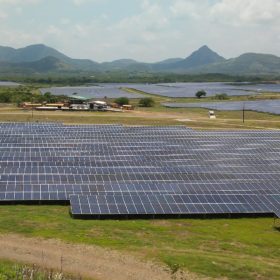
Improving PV-based hydrogen generation with loss‐mitigation techniques
Australian scientists have demonstrated two loss-mitigation techniques that could improve solar‐to‐hydrogen (STH) conversion efficiencies and may lay the ground for cheaper PV-powered hydrogen generation. By combining the two techniques, they were able to achieve an STH efficiency of around 19.4% at realistic operating temperatures.

What is the UK government’s problem with solar?
You’ll need to pay close attention to find the few mentions of solar in the long-awaited White Paper issued by the government to outline how it plans to hit net zero by mid century.
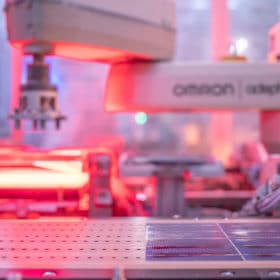
Another decade of PERC
A new paper from scientists at Germany’s Fraunhofer Institute for Solar Energy Systems (ISE) examines the entire history of PERC technology, from its beginnings in laboratories more than 40 years ago to today, where it represents the majority of all PV cell production. And this story is far from over, as ISE lays out a pathway to efficiencies of 26% as well as use as the bottom cell in a tandem device that it believes will keep PERC technology in mass production to 2030 and beyond.

New study debunks several myths about floating PV
Dutch researchers have shown that bifacial floating PV arrays do not benefit significantly from sunlight reflected from the water, and claim that the water only reduces panel temperatures by a small amount. Bird droppings may also affect system performance, but floating PV could achieve a lower LCoE than ground-mounted arrays if such issues are addressed, they say.
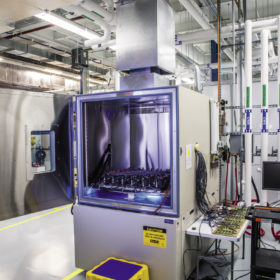
DNV GL’s Battery Scorecard 2020 sees manufacturers focus on LFP and fire safety
The third annual scorecard published by the consultant has tested 22 batteries with different chemistries for cycling stability and temperature-dependent behaviour and identified significant product trends.
