
Trina claims 3% energy gain with new tracking system over traditional trackers
The company’s integrated tracker manufacturer Nclave developed a new system designed primarily for large-form factor modules and with a new algorithm that promises to boost yield in diffuse light conditions.

The impact of solar spectra on PV module performance
Scientists in Poland have measured the effect of solar radiation spectra in variable weather conditions on the performance of different kinds of PV module technologies. They found that amorphous silicon panels offer the best response to this effect in stationary or BIPV projects on facades, while crystalline silicon and CIS solar panels represent the best options in projects with trackers.

Iconic investor signs up for world-first domestic hydrogen battery in Australia
Gowing Bros has become the first major customer of the LAVO 40 kWh battery in Australia. The system, which features an electrolyzer and domestic fuel-cell tech, will be market-ready in June.
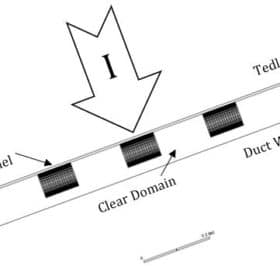
Passive cooling with porous materials for PV modules
Researchers in the Middle East have proposed a new passive technology to cool off solar modules, based on highly conductive porous materials.

Improving PV-powered water electrolysis with external fields
Australian researchers have analyzed different ways to improve the efficiency of PV-powered water electrolysis for hydrogen generation. They include the use of magnetic fields, light energy, ultrasonic fields, and pulsating electric fields. Energy costs remain prohibitive, but molecular movement and the redistribution of molecules in water during electrolysis could open a path to viability.

The best redox flow battery tech
Batteries based on vanadium or zinc bromide represent the cutting edge of redox flow storage tech, an international research team has claimed. They have identified challenges and opportunities for about a dozen redox flow storage technologies, while providing estimates of their current and projected levelized costs of storage.
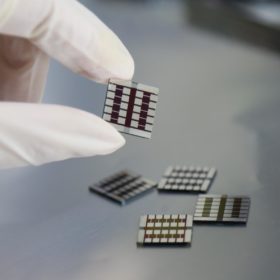
A pinch of chili gives perovskites a kick
Scientists in China found that capsaicin, the natural compound responsible for a chili pepper’s spicy flavor, can also act as a ‘secret ingredient’ in perovskite solar cells, making them both more efficient and stable. The group added capsaicin to the precursor materials of a common perovskite, leading to dramatic improvements in the resulting solar cell.

Mitsubishi and Japanese university offer peer-to-peer trading alternative to FIT payments
Blockchain systems are being tested as a means of offering solar households revenue for excess power they generate, now the FIT program has ceased.
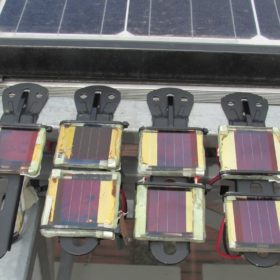
Measuring outdoor performance in perovskites
Scientists in Spain and Colombia took a closer look at the degradation mechanisms affecting perovskite solar cells, and developed a new, high throughput method to characterize their performance in an outdoor setting. The group evaluated the method through outdoor testing on perovskite modules manufactured in a lab. it expects its findings to offer easier device characterization and better understanding of the degradation mechanisms affecting perovskite solar cells, both important factors in the technology’s development.
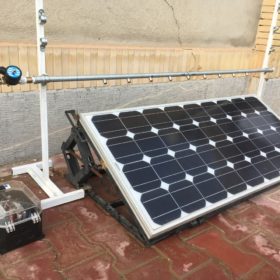
Pulsating spray cooling system for PV modules
Iranian scientists have assessed a new active approach for solar module cooling based on water spraying. Water sprayed from different angles can reduce the operating temperature of PV modules, with limited water consumption. However, the team noted that they have yet to assess the economic viability of the system.
