Another decade of PERC
A new paper from scientists at Germany’s Fraunhofer Institute for Solar Energy Systems (ISE) examines the entire history of PERC technology, from its beginnings in laboratories more than 40 years ago to today, where it represents the majority of all PV cell production. And this story is far from over, as ISE lays out a pathway to efficiencies of 26% as well as use as the bottom cell in a tandem device that it believes will keep PERC technology in mass production to 2030 and beyond.

New study debunks several myths about floating PV
Dutch researchers have shown that bifacial floating PV arrays do not benefit significantly from sunlight reflected from the water, and claim that the water only reduces panel temperatures by a small amount. Bird droppings may also affect system performance, but floating PV could achieve a lower LCoE than ground-mounted arrays if such issues are addressed, they say.
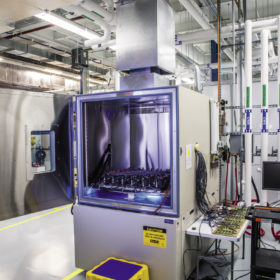
DNV GL’s Battery Scorecard 2020 sees manufacturers focus on LFP and fire safety
The third annual scorecard published by the consultant has tested 22 batteries with different chemistries for cycling stability and temperature-dependent behaviour and identified significant product trends.
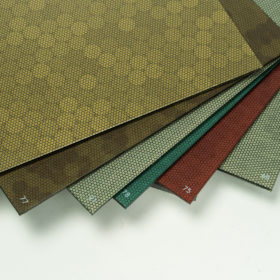
Colored facade solar panels with 13.8% efficiency
Dutch startup Solarix has developed a new line of facade solar panels featuring 13.8% efficiency and output ranging from 110 to 180 W, depending on the module size and color. The panels can be bolted or glued onto aluminum mounting systems applied to facades.
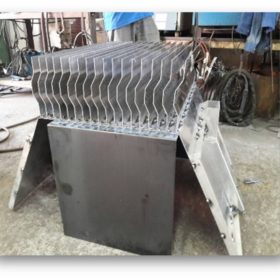
Solar module passive cooling with lapping fins
Malaysian researchers have proposed a new passive technology for solar module cooling based on fin heat sinks. The tech ensures lower PV system payback times and reduces operating module temperatures by up to 26 C.
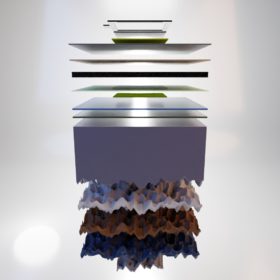
Focus on stability as tandem cells approach 30% efficiency
The Helmholtz Zentrum Berlin set a world record for perovskite-silicon tandem cell efficiency last year at 29.15%. The group has delved further into the cell materials, looking to better understand mechanisms behind the impressive efficiencies achieved so far. Their latest work shows that with the current cell design, long term stability at efficiencies up to 32.4% should be possible.
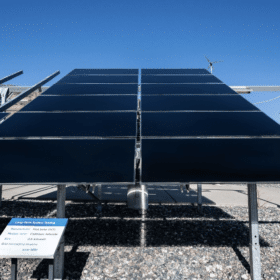
First Solar’s PV module tech completes 25 years of testing at NREL
“Determining how many years a solar panel will last can take, well, years.”
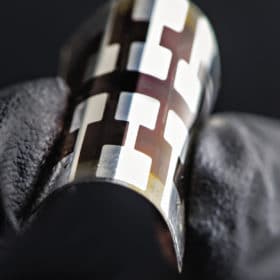
Global research team sets up database for emerging PV tech
An international research team has set up a new database with crucial data on emerging technologies for perovskite, organic, and dye-sensitized solar cells. The platform also includes information on the best flexible solar cells.
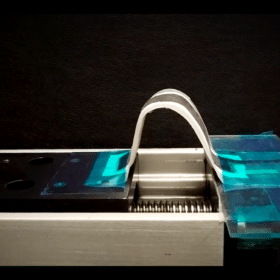
A silver-oxide zinc battery — flexible, screen-printed and with 20 times the capacity of Li-ion
A team comprising researchers from the University of California San Diego and micro battery developer ZPower have developed been busy in the lab. The result is a flexible battery with highly competitive electrochemical features and the option to manufacture at low cost with screen-printing.
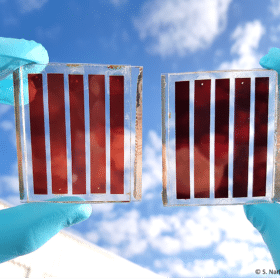
Semi-transparent dye-sensitized solar module with 8.7% efficiency
The mini-panel showed a short circuit current of 58.1 mA, an open circuit voltage of 3.63 V, and a fill factor of 58.26%. It has a power output is 122.9 mW and an active area of 14 cm2.
