
Green hydrogen and the cable-pipeline dilemma
New research from Singapore has found that gas pipelines for the onshore transport of green hydrogen and the cables for the transport of electricity to produce it at a distant location have similar costs at a 4000 km transmission distance. For longer distances, gas pipelines were found to be cheaper than cables, although the electric lines are said to benefit from scaling up and higher utilization. For both options, however, a currently too high hydrogen LCOE remains the biggest barrier to overcome.
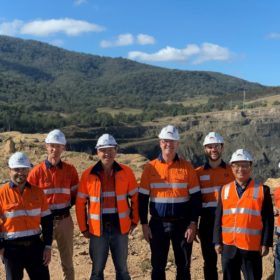
Australian coal mine to transform into pumped hydro facility
Australian utility AGL is transforming its operations in a number of ways, from restructuring the company itself, to building energy storage facilities for flexible distribution of renewable energy into the future. The company is also planning to build a pumped-hydro facility at a disused open-cut coal mining site in eastern Australia.

The Hydrogen Stream: 39,700 km European hydrogen network planned, Germany means business
Several heavyweights in Germany have announced projects to move forward with green hydrogen. RWE, Uniper and Bosch have all announced large-scale projects and the German government has allocated €52 million for hydrogen research. The European Hydrogen Backbone (EHB) initiative is proposing a hydrogen network of 39,700 km by 2040, with further growth expected after 2040.
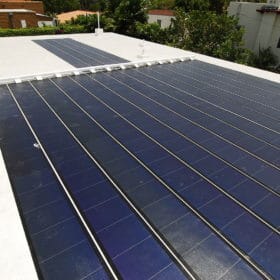
Amorphous silicon solar cells still niche market
In the second interview of a series, Arvind Shah, a professor at École polytechnique fédérale de Lausanne, told pv magazine about the challenges facing amorphous silicon cells. He said the tech could be used in some window applications and greenhouses, but not in rooftop projects, as the stabilized efficiency of these cells is too low.
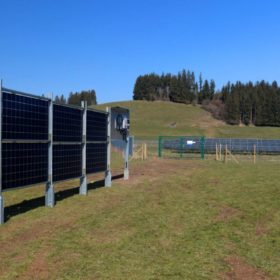
German power provider tests vertical agrivoltaics
Lechwerke is testing two pilot systems close to existing solar parks. It also aims to build its first large-scale project.
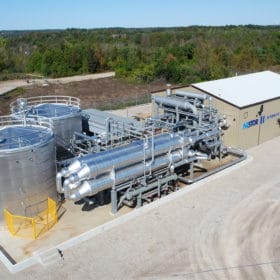
New compressed air storage tech from Canada
Canadian compressed air storage specialist Hydrostor said that projects built with its technology have a capex range of between $175 and $250/kWh. The company secured C$4 million ($3.19 million) in funds from Natural Resources Canada’s Energy Innovation Program and Sustainable Development Technology Canada to pursue the development of its global pipeline.
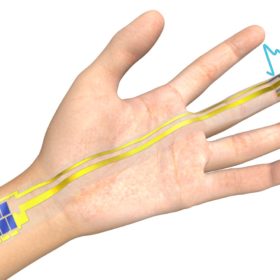
I’ve got solar over my skin
Researchers in Japan have built a PV-powered device to measure volumetric variations in blood circulation. The system, which is just a few microns thick, was built with an organic solar module, a polymer light-emitting diode (PLED), and an organic photodetector.

5N Plus enters space solar cell business with acquisition of Azur Space
The purchase price should range between €73 million and €79 million. Azur Space produces triple-junction space solar cells with an average efficiency of up to 30% and is planning to develop ultra-thin solar cells with up to 35%.
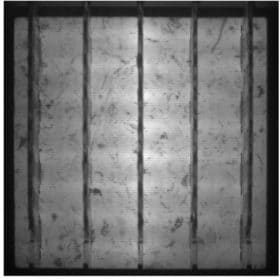
Low outdoor degradation for 20.76%-efficient solar cells made of UMG silicon
Spanish manufacturer Aurinka has tested the degradation rate of its 20.76%-efficient solar cells made of 100% upgraded metallurgical grade (UMG) silicon and has found it shows the same values as conventional polysilicon. The company is currently building a UMG factory in northern Spain.
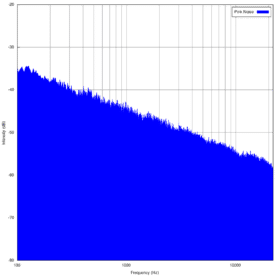
Noise-based technique to test crystalline silicon solar cells
The proposed technique is said to be able to connect directly to the microscopic and medium scale defects in the solar cell materials. It is based on three kinds of noises that science has thus far been able to identify in PV devices.
