
Concentrating photovoltaic-thermal system with 91% efficiency
A global research team has developed a parabolic trough linear concentrating photovoltaic-thermal system to produce heat and electricity, for both residential and large-scale applications. The PV unit relies on Azure Space’s multi-junction solar cells, based on indium gallium phosphide (InGaP), gallium arsenide (GaAs) and germanium (Ge).

Australian startup to replace silver with copper in solar cell manufacturing
Startup SunDrive has secured US$2.2 million in funding from the Australian Renewable Energy Agency to help scale its low-cost, high-efficiency solar cell manufacturing process.

Port of Rotterdam micro-market trial boosts battery storage returns 20%
A small-area trial of artificial intelligence and blockchain-based energy trading software demonstrated big improvements across all renewable energy performance metrics. The port authority now wants the system across all its premises.
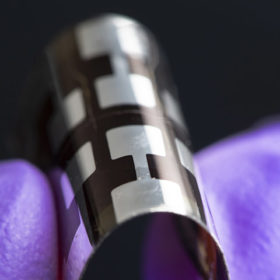
NREL scientists build all-perovskite tandem solar cell with 23.1% efficiency
The U.S. based researchers have developed a new wide-bandgap perovskite layer – called Apex Flex – which they claim is able to withstand heat, light, and operational tests, and at the same time provide a reliable and high voltage. With this material, they built tandem solar cells with 23.1% power conversion efficiency on a rigid substrate, and 21.3% on flexible plastic.
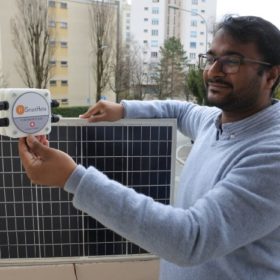
Swiss solar monitoring start-up raises $272,000
SmartHelio claims to have witnessed a near 200% jump in demand for its deep-data driven solar asset management solution, which plugs into solar panels or energy storage systems. Sales of the internet-of-things enabled, cloud product have leapt in the last six months.
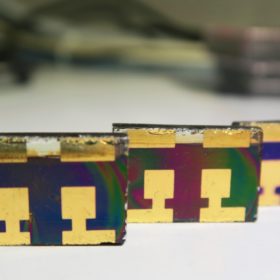
Chemical assist for stable perovskite cells at 23% efficiency
Scientists at the École Polytechnique Fédérale de Lausanne have developed a new ‘chemical innovation’, for the deposition of perovskite solar cells onto a substrate. The method is shown to produce cells at better than 23% efficiency, that remained stable after 500 hours testing at a raised temperature.
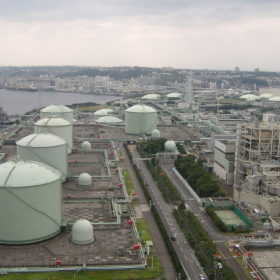
Cooling PV panels with regasification of liquefied natural gas
Researchers in Israel have suggested the use of regasification of liquefied natural gas to reduce the operating temperature of PV modules in solar parks located at gas terminals. According to them, the feasibility of such a cooling solution could be strengthened by the fact that both the PV systems and the LNG regasification systems are, separately, mature, economical technologies.
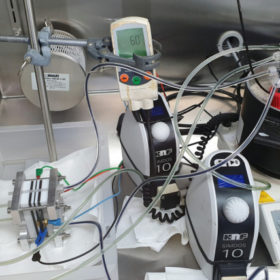
Ferrocene-based electrolytes for heat-resistant redox flow batteries
German scientists have developed a new electrolyte material that can cope with temperatures of up to 60 C. The material is based on ferrocene, an organometallic molecule known for good redox stability that is commonly used as an internal standard for electrochemical measurements.

Agrivoltaics for pear orchards
Belgian researchers are testing agrivoltaic power generation in a pear orchard. The first pilot project features specially designed 185 W solar panels with transparent backsheets, conventional silicon cells, and a 21% efficiency rate.
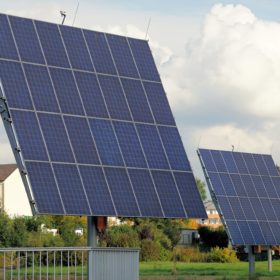
Badly-sited solar parks affect house prices
Researchers at the University of Rhode Island have suggested US homeowners are prepared to pay $279 per year to avoid living within a mile of a solar plant.
