
Scientists in China give flexible perovskites a backbone
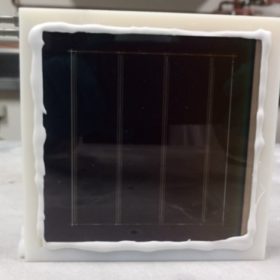
A team of researchers led by Nanchang University in China trialed a polymer based hole transport layer to flexible perovskite solar cells, using a glue to attach it to the active perovskite. The team was able to assemble the 19.87%-efficient cells into a small flexible module suitable for wearable solar applications, and says its design was inspired by the structure and movements of human vertebrae.
PV-electrochemical water-splitting for hydrogen production
A German research team has developed a new photovoltaic-electrochemical device for alkaline water electrolysis. The prototype has an initial solar‐to‐hydrogen efficiency of approximately 7.7%.

A window of opportunity for new transparent electrode
Scientists in Australia have developed a new transparent conductive oxide which could be used in solar cells, smart windows and other applications. The material is indium free and recyclable, according to the researchers.

Hydrogen storage in salt caverns
Researchers in Germany have identified salt caverns as a feasible and flexible solution for hydrogen storage. They also revealed that Europe has the potential to inject hydrogen in bedded salt deposits and salt domes, with a total storage capacity of 84.8 PWh.

A long way to go for iron pyrite solar cells
A paper from Sweden has attempted to uncover why the conversion efficiency of solar cells based on cheap, abundant iron pyrites continues to languish below 3% despite the apparent optoelectronic promise of the material.
CIGS solar cell with IBC structure and up to 19.7% efficiency
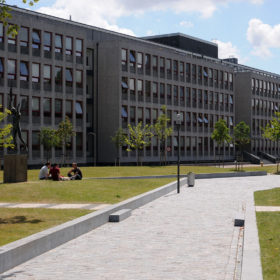
Scientists in the Netherlands have demonstrated an interdigitated back contact copper-indium-gallium-selenide solar cell with a sub-micron thickness of 673nm. The device has an aluminum oxide and magnesium fluoride-based anti-reflective coating.
New approach to energy management in microgrids
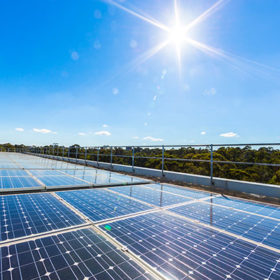
Researchers from Australia’s Monash University have developed an energy exchange framework to manage distributed energy resources and help consumers lower their power costs.
Semi-transparent mini BIPV panels for solar windows
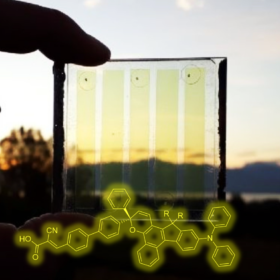
European scientists have developed mini modules with an active area of 14 cm² and a 3.68% efficiency rating. The panels also have a self-adjusting feature that can help to mitigate the amount of light when they are exposed to full sunlight, or to the temperatures of buildings with large windows and/or glass facades.

A closer look at graphene electrodes
Scientists in the United States have found several shortcomings in the approaches commonly used by scientists to model the structure of electrodes. The group outlines a new approach which it says could lead to the discovery of new materials and combinations that can lead to batteries performing better for longer.
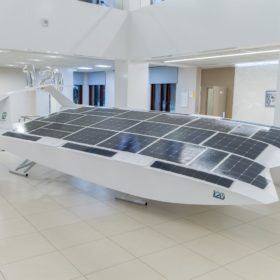
World’s first self-drifting solar boat
The pilotless, high-speed solar boat, now under development by Russian scientists, purportedly has unlimited power reserves. It could be used for marine patrols, search and rescue operations, and cargo delivery, they said.
