An 18.12%-efficient perovskite solar cell with reduced hysteresis
Researchers in Japan have modified the tin(IV) oxide layer of a perovskite device with a fullerene-derivative-based self-assembled monolayer to produce a cell they claim offers stability and a reduction in the hysteresis effect which makes predicting power output so tricky.
PV plants lasting longer, with lower operational costs
Solar plants are now expected to last 32.5 years and cost $17 per kW/year to operate, as shown by a Berkeley Lab survey of industry participants.

Assessing the soiling mitigation properties of anti-reflective coatings
Researchers in China have sought to understand how soiling exacerbated by anti-reflective coatings might inhibit solar panel output. In terms of effectiveness against soiling, the scientists found hollow-silica-nanoparticle coatings did better than solid silica alternatives.

Electric aircraft engines could take to the skies over Australia
Zero-emission, low-cost regional flights with just eight other sanitized folk and a disinfected pilot! Yes, Covid-19 is warping our view of the future but the successful electrically-powered maiden flight of a Cessna Caravan last week offers the potential for new modes of transport to support a wider economic recovery in Australia.
Baywa’s plans for floating PV
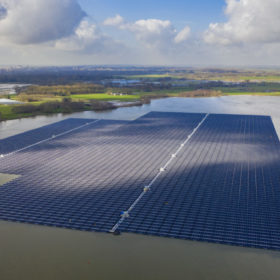
Over the past two years, German renewables business Baywa re has developed in-house floating solar technology and installed nearly 50 MW of projects in the Netherlands. Benoît Roux, director of solar activities at Baywa re in France, said the ramp-up in project size has enabled the company to achieve dramatic cost reductions.
Chinese PV Industry Brief: 4.3 GW of new cell capacity and a 1 GW solar park
Cell manufacturer Aiko Solar is raising funds to increase its production capacity with 4.3 GW of new lines while Datang Corporation has inked a deal for a 1 GW desert project.
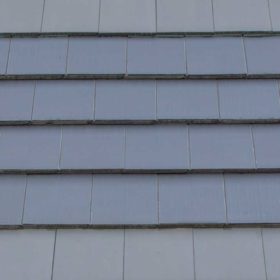
A 17.5%-efficient dark grey solar tile
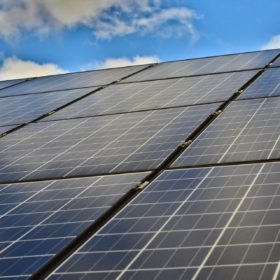
U.K. business Roof Tiles Technology Ltd has developed a solar tile with a claimed efficiency of 17.5% and power output of 175 W per square meter. The company’s founder, Antonio Lanzoni, said a PV system featuring the product would cost 25-30% more than a standard solar rooftop.
Climate-friendly businesses can secure €500,000 EU investment to get through Covid crisis
A cash fund is offering financial aid to start-ups and SMEs to mitigate the effects of the public health crisis. The grants will convert into a stake in the recipients at a future date.

Innovation promises cheaper solar cell glass manufacturing
Scientists have developed a hybrid production method combining metal mesh and a metal-oxide layer over a glass substrate which they say brings down production cost by 80% compared to the tin-doped, indium oxide-based technology currently in use.

Software developer claims its platform can unlock a distributed generation world
U.K.-based Power Transition today launched a crowdfunding exercise to raise the £300,000 it says it needs to scale up its blockchain-based, peer-to-peer energy trading platform beyond a 47-home demonstration project.
