
MIT works to refine the flow of promising perovskites
Scientists at the Massachusetts Institute of Technology have developed an accelerated process for screening new perovskite compounds as they search for those with the potential to be used in high efficiency solar cells. According to MIT, the process speeds up the synthesis and analysis of new compounds by a factor of ten and has already highlighted two sets of materials worthy of further study.
Five hot PV module and cell takeaways from SNEC
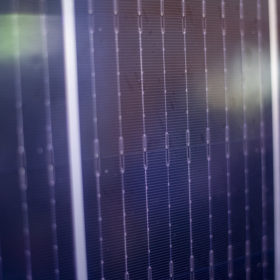
While lacking the swarming crowds of previous years, the 2019 SNEC in Shanghai remained a focal point of the global PV industry when it comes to industrial solar cell and module manufacturing and technology. Here are five hot technology takeaways from the pv magazine team on the show floor and conference sessions.
Nothing can bring down the price of III-V solar cells – just add germanium
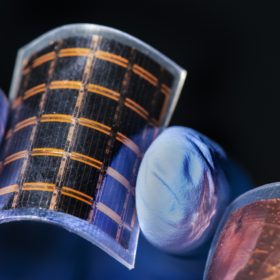
A research paper from scientists at the U.S. National Renewable Energy Laboratory outlines a new approach to the production of gallium arsenide based cells. The approach, termed ‘germanium on nothing’, could enable the cost effective, high volume production of PV cells based on III-V materials such as gallium arsenide.
Innovation and uncertainty mark SNEC 2019
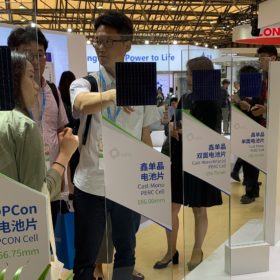
There was plenty of innovation on display at this year’s SNEC, which closed yesterday afternoon at the Shanghai New International Expo Center. The three-day exhibition ran from Tuesday to Thursday, was well attended and still ranks as the world’s largest solar energy trade show.
Prototype modules featuring ‘3D wafers’ on show at SNEC
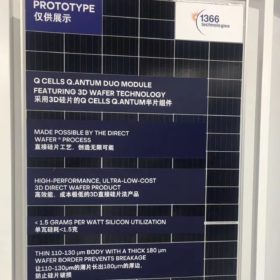
New modules incorporating American company 1366 Technologies’ 3D direct wafers were unveiled yesterday at the SNEC trade show in Shanghai. The prototype modules are produced by Korean manufacturer Hanwha Q Cells. The two companies have a strategic partnership going back several years, and are ramping up a wafer factory near Q Cells’ module facilities in Malaysia.
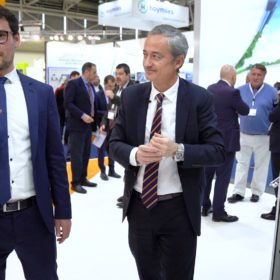
Video: Gamesa Electric’s central inverter keeps it cool in heat and dust
At Intersolar Europe, Gamesa Electric’s solar sales director, Enrique de la Cruz explained the key to ensuring high reliability and a low energy price with the company’s new central inverter offering.
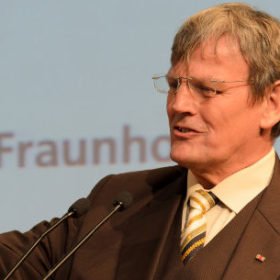
European Solar Manufacturing Council chooses Eicke Weber as chairman
The former director of Fraunhofer ISE will be officially elected at a general assembly planned for September. The ESCM wants a strong Europe to be part of the Fourth Industrial Revolution and also pay attention to sustainability.

UK scientists observe LID in action
A team of researchers from Manchester University claims to have identified the dominant process causing light-induced degradation in silicon solar cells. The process, termed “trap-assisted auger recombination”, arises from a defect in the bulk of the silicon material which lies dormant until exposed to sunlight.
Tongwei announces output tie-up with Longi
The two Chinese companies will acquire 30% shares in each other’s respective wafer and silicon businesses and plan to purchase at least 75% of each other’s future output, as part of a complex mutual investment arrangement announced ahead of the SNEC PV Power Expo 2019.

Video: Quality Roundtable tackles glass-glass issue and underground cabling
At The smarter E Europe trade show, held in Munich in May, pv magazine was invited for another iteration of its Quality Roundtable events. Experts from manufacturing, project planning, finance and testing took the stage to inform the crowd on quality issues with modules, cables and inverters.
