Webinar Q&A: “Are half-cut cell modules the future?”
Many manufacturers are converting large parts of their production capacities to half-cut cell technology. Is this a niche or will the traditional full cell module eventually disappear? The use of the new technology has clear advantages for manufacturers and buyers, say the experts.

PV rooftop simulators may unlock solar growth in developing cities
IRENA says technologies for 3D rooftop footprint generation and solar irradiation modelling are becoming increasingly cheap, making them suitable for deployment anywhere in the world. Developing cities across Africa and Asia could access such technical resources to plan rooftop PV development.

UK researchers say transport layers with low permittivity and doping make perovskite solar cells more stable
Scientists are seeking to push ion migration to areas of perovskite-based solar cells where more electric charge can be extracted.
Fraunhofer IKTS unveils alternative for PV home storage based on sodium-nickel-chloride
At a storage fair in Dusseldorf, researchers will present a ceramic high-temperature battery. Storage costs using sodium-nickel-chloride battery cells are said to be 50% lower than those of lithium-ion.
Clustering-based computation used to measure PV module degradation
The method could be an effective tool to measure the performance of solar modules, according to research, due to its ability to speed up the inspection process, preventing further damage and hastening repairs.
Canadian-UK funding for pilot smart grid solutions
A competition backed by public funding from the governments of the two nations is seeking proposals for projects that will help electricity grids transition to clean and flexible energy.
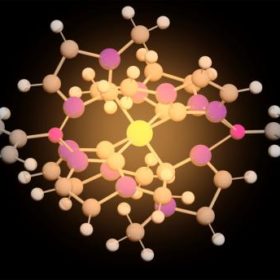
Iron therapy for solar cells
A research team from Sweden has developed a new iron-based molecule, which it says has the potential for further cost reductions in solar cells, and can also function as a photocatalyst to produce fuel.
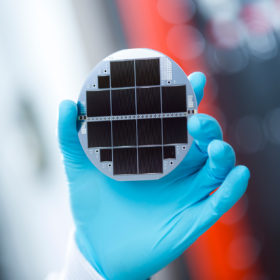
Fraunhofer ISE achieves efficiency record for silicon multi-junction cell
The German institute has achieved another efficiency record for multi-junction solar cells. More cost-effective production methods for III-V-layer cells have also been advanced during work as part of the MehrSi project.

PV Evolution Labs to go it alone again outside DNV GL
The PV panel testing company has left the fold four years after being acquired by DNV GL. Insiders have stressed the move should not be problematic as PVEL was allowed a degree of independence after it was acquired.

Off-grid Swedish housing block to be supplied 100% by PV, hydrogen
Upon completion, the long-term storage benefits of compressed hydrogen, coupled with an abundance of solar radiation in the summer months, will allow for a fully energy-sufficient 172 home apartment block in Sweden.
