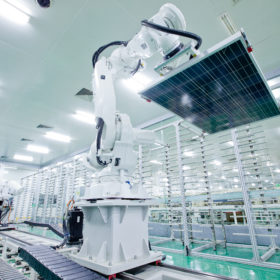
Taking the heat: Jinko cells put through their paces under new LeTID test
Chinese solar giant JinkoSolar says it has put its products through a new set of standards testing for light-elevated temperature induced degradation, with the new examination regime set to be adopted as an industry standard.
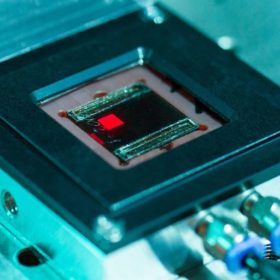
German researchers increase open circuit voltage of perovskite solar cells to 1.26 volts
The voltage is key to improving efficiency, the scientists say. It indicates how much energy is lost within the cell through ‘recombination processes’.
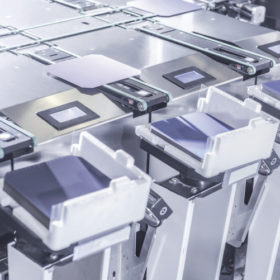
French researchers produce 348 W half-cell HJT module
Scientists at France’s Alternative Energies and Atomic Energy Commission, working with Swiss equipment supplier Meyer Burger, have hit 23.9% efficiency in large-scale production of heterojunction cells. The team also combined HJT cells with other technologies to produce a module with a 348 W power rating.
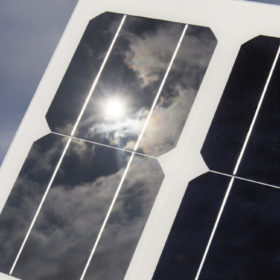
The weekend read: Reflections on a soiled module
Having quickly proven their performance-boosting potential and durability, anti-reflective coatings are now found on the majority of modules rolling off the world’s production lines. Today, coating suppliers are looking to tackle losses from soiling as well as reflection, and working to keep up with cost reductions and extended lifetime expectations at module level. Older modules, installed without a coating, could also be set to benefit from the latest innovations.
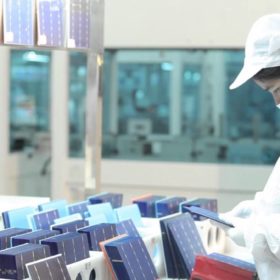
Jinko achieves 24.2% efficiency for its n-type monocrystalline cell
The Chinese module maker said the result was certified by the Photovoltaic and Wind Power Systems Quality Test Center at the Chinese Academy of Sciences. The record, Jinko said, is thanks to its high quality n-type wafers, selective doping technology and advanced fine-line printing.
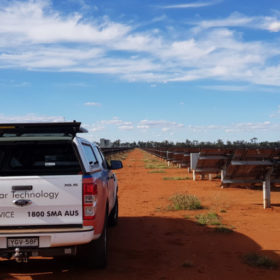
Price pressure and delivery bottlenecks lead SMA to significant loss in 2018
The German inverter maker struggled after China’s announcement at the end of May drove down prices and markets around the world and left a clear mark on its figures. Both the commercial PV segment and the storage business fell short of expectations due to delivery bottlenecks.
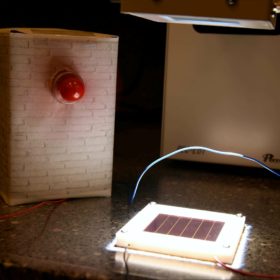
It’s all in the electrons – Japanese scientists give perovskites a push
Scientists at the Okinawa Institute of Science and Technology have developed a process for the creation of perovskite cells with better than 20% efficiency. The cells use a tin-oxide electron transport layer, which the scientists say can triple their operational lifetime.

Toyota and Panasonic to form EV battery joint venture
The deal foresees 3,500 employees from both companies joining the unit, as well as equipment and production facilities to be used to improve battery technologies and develop next-generation solutions.
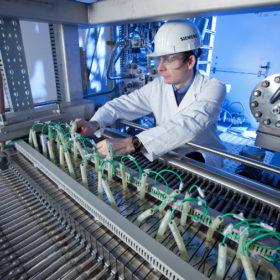
Australia may target green hydrogen exports in billion-dollar plan
The Australian Labor Party has released a National Hydrogen Plan, which involves directing AU$1 billion in CEFC funding towards clean hydrogen projects, $100 million in ARENA grants for hydrogen technology refuelling infrastructure, and $40 million from the CEFC’s Innovation Fund to help commercialise new hydrogen technologies and businesses. Looking towards clean energy exports, the plan will provide $3 million in funding to Queensland coal port in Gladstone with the aim of creating a hydrogen hub.
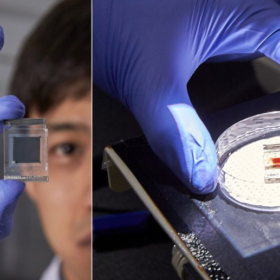
Korean scientists demonstrate new lead-free perovskite
A team of researchers from South Korea’s Ulsan National Institute of Science and Technology has demonstrated a new type of tin-based perovskite. The researchers say that, despite current low efficiency, levels could lead to improved understanding and the development of solar cells using lead-free perovskites.
