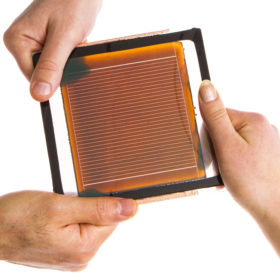
Perovskites meet the stability standard
European research group Solliance says its perovskite modules have passed three key industry standard reliability tests: Light soaking, damp heat and thermal cycling. The group said it is the first time perovskite modules of that size have achieved such results and represents a milestone in the technology’s move toward commercialization.

Solving seasonal storage with aluminum cycling
Scientists at Switzerland’s University of Applied Sciences Rapperswil have demonstrated an aluminum conversion process which could be valuable for long-term renewable energy storage. Simulations suggest that by employing the process, a new multi-family building in Switzerland could meet all its energy demand from a 7-11 kWp solar system.
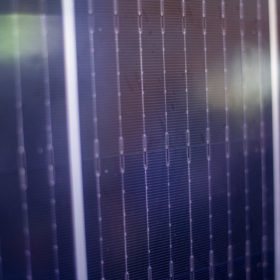
A new front electrode structure for shingled PV panels
Researchers in Korea have proposed a new design for dividing and bonding which is said to provide higher efficiency from fewer fingers. The number of fingers optimized for division into five cells was 128 and for three, 171. Five offer power conversion efficiency of 17.346% and three 16.855%.
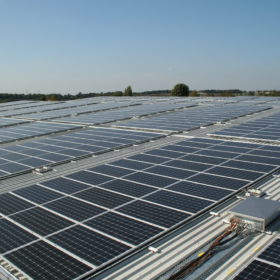
A new strategy to mitigate voltage spikes in small solar systems
The approach combines virtual impedance and a modified pulse-width modulation strategy to suppress fault currents in grid-connected PV systems.
The best way to predict the I-V profile of PV panels
A study has considered the best mathematical models for predicting solar module performance under varying conditions.

Lead-free soldering in modules: It can be done!
pv magazine’s UP sustainability campaign has investigated the use of lead in PV panels and found, with soldered cell interconnections in particular, viable alternatives are scarce. However, German headquartered manufacturer Opes Solutions has launched a small module for the off-grid market featuring lead-free solder, developed at the request of a customer. We caught up with Opes CEO Robert Händel for a closer look at the module and the challenges and benefits of going lead-free.

Panasonic claims 16.09% efficiency for lightweight perovskite solar module
The device has an area of 802cm² and thickness of 2mm. The manufacturer claims it improved module performance through an inkjet coating method and a reduction in weight by using thin glass substrates.

Mysterious new chlorophyll with potential PV applications
Japanese researchers are studying the ‘Chl f’ substance which features a pigment in photosynthesis which can absorb far-red light from the lower end of the spectrum.
Crop yield rises with solar-powered irrigation
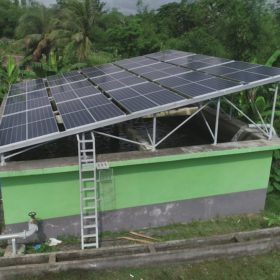
PV systems have helped farmers in the Philippines become less dependent on rain. Projects in Camarines Sur have shown pumping water with solar is not only cheap but can also raise rice yield.

Pilot agrovoltaic project with mobile PV modules launched in France
The solar facility, near Lyon, will be developed by Engie unit Compagnie Nationale du Rhône. Tests will be carried out for three years at a project intended to demonstrate the benefits of combining solar with agriculture.
