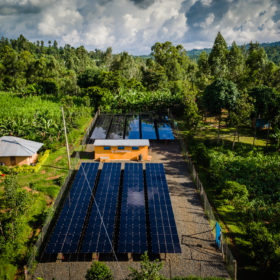
Chinese shadow over latest IEA world energy report
The International Energy Agency’s latest study of global energy investment paints another rosy picture for solar – even as the authors warn of missed sustainable growth targets – but the report covers last year, and notes China’s policy about-turn could blow a cold wind through PV.

SolarEdge extends patent infringement lawsuit against Huawei
Following the claim filed in June, SolarEdge now alleges Huawei has infringed two more of its patents. With its HD-wave inverter topology the subject of the first lawsuit, the Israeli manufacturer now says its Chinese rival also copied its power optimizer technology.

Repsol, Enagás join forces to produce hydrogen from solar energy
Two months after announcing its intention to turn to renewables, the Spanish oil giant has for the first time formed a technological tie-up that integrates a partner into the company’s value chain.

UK based scientists demonstrate ‘charge funnels’ to boost solar efficiency
A team of researchers from the University of Exeter has demonstrated a technique which creates ‘charge funnels’ within certain semiconductor materials. The researchers state that the technique could eventually lead to the development of PV cells with better than 60% efficiency.
Total looks to Chinese EV market
Oil and gas company Total has announced it will work alongside Shanghai-based NIO – the world’s inaugural Formula E champion – to develop products for a potentially huge electric vehicle marketplace in the populous Asian nation.
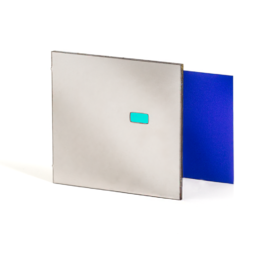
Imec hits 27.1% on perovskite/silicon tandem cell
Belgian research institute, Imec has announced the achievement of 27.1% efficiency on a perovskite/silicon tandem cell, providing further evidence of the technology’s potential to provide a low cost efficiency boost to existing PV technology.

Video: Future PV Roundtable @ Intersolar Europe 2018
Peijun Shen of Huawei discusses integrating bifacial modules into PV power plant projects from the Future PV discussion at this year’s Intersolar Europe. Bifacial technology is making leaps and bounds, and suppliers up and down the value chain have to deliver new technologies and solutions to pave the way for the next steps in PV systems.

Italy: Glass to Power crowdfunds €2.25 million, plans solar window fab
Italy-based Glass to Power has raised €2.25 million via crowdfunding to advance its plans for the roll out of an industrial production line for its transparent solar PV windows. The product is expected to be marketed in 2019.
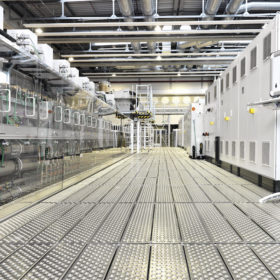
The weekend read: CIGS is back, back again
Stability and reliability, partial transparency, monolithic deposition onto flexible substrates, aesthetically pleasing appearance, applicability in roll-to-roll production, superior temperature coefficient, potential in tandem applications, and suitability for BIPV: The list of advantages that CIGS technology offers is well established and lengthy.
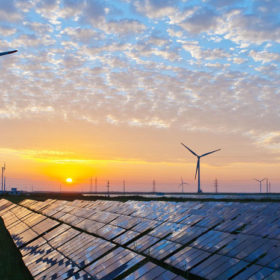
Global energy investment in 2017 moved away from energy security and sustainability goals, finds IEA
Following a strong year for clean energy spending, 2017 saw a 7% decline in renewable power investment – to around $298 billion – while the share of fossil fuels in energy supply funding rose for the first time since 2014, according to the International Energy Agency in a report published today.
