Indian government invites solar research proposals
The MNRE has invited proposals for high-efficiency perovskite solar cells, solar panel recycling, hybrid inverters and new applications that combine solar and storage, among others.
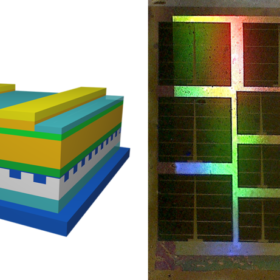
German-French scientists develop ultra-thin GaAs solar cell with 19.9% efficiency
The researchers have developed a new manufacturing process by using an ultra-thin absorbing layer made of 205-nanometer-thick gallium arsenide (GaAs) and a nanostructured back mirror.
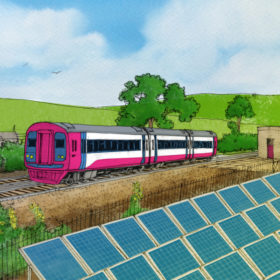
Don’t have a node for your solar plant? Connect it to the railway!
Railway operators can now feasibly connect solar plants to traction substations, claims a consortium that is now working on a similar demonstration project in the U.K. Almost all of the 30 kW installation’s output will be used to move trains, but in the future storage could come into the picture for larger “railway-connected” solar power projects, says 10:10, the U.K.-based climate change charity that developed the pilot.
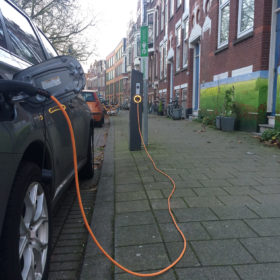
Economics of road transport starting to favor renewables
According to a new report by BNP Paribas Asset Management, renewables offer more advantages than simply mitigating climate change. Electricity is easier to transport than oil, and wind and solar electricity prices are much more stable than volatile oil prices. An analyst from the French bank argues that major producers will need to reduce oil prices below $20 to compete with clean energy in the transport sector.

Understanding solid state degradation
Scientists at the U.K.’s Faraday Institution have been able to observe degradation mechanisms at the lithium metal anode in a solid state battery, and made several discoveries which could improve the performance and design of future solid-state lithium-ion batteries.
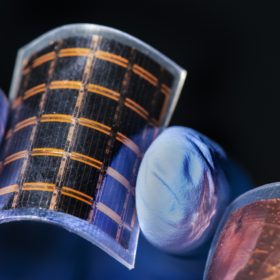
Another step toward affordable III-V solar cells
The U.S. National Renewable Energy Laboratory reports further progress in bringing down the cost of III-V solar cells. Scientists have refined their ‘brand new, 50-year-old’ D-HVPE technology to speed up the production rate for gallium arsenide solar cells by a factor of more than 20. The development is a potential step toward making incredibly efficient solar cells cost effective for everyday purposes.
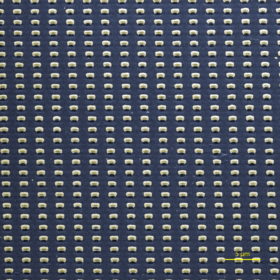
Harnessing heat for 80% theoretical efficiency
Scientists at Rice University in Texas have developed a device which converts heat into light by squeezing it into a smaller bandgap. The ‘hyperbolic thermal emitter’ could be combined with a PV system to convert energy otherwise wasted as heat – a development the researchers say could drastically increase efficiency.
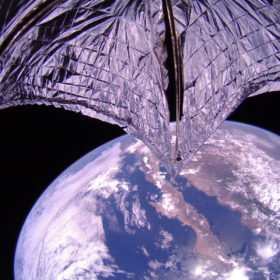
Solar sails into orbit on crowdfunded satellite
A satellite launched from Florida last month has successfully unfurled its ‘solar sail’ in an early test of a new type of sunlight powered propulsion. The Planetary Society aims to demonstrate the technology as a viable way to propel small satellites, greatly lowering the cost of space exploration.
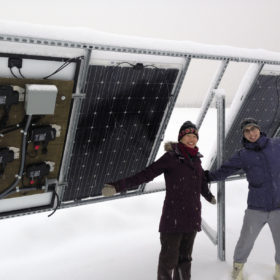
The weekend read: Pursuing a 20% bifacial boost
Research on bifacial solar panel performance has moved performance analysis closer to a standardized practice than ever before. More field tests are underway across the United States, and the first waves of data are expected this year. These tests will help standardize a predictive model for bifacial projects that is bankable.
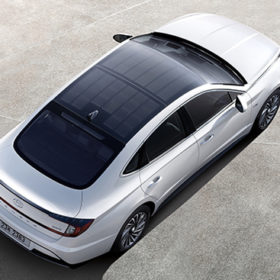
Hyundai enters the solar car race with new Sonata
Hyundai has unveiled its new hybrid, the Hyundai Sonata, complete with integrated solar cells. The Sonata’s unveiling joins Toyota and Lightyear in integrating solar PV with EVs.
