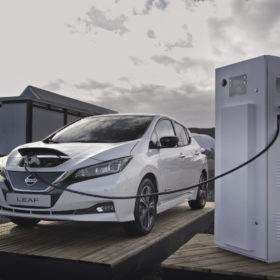
Global electric car fleet may reach 250 million by 2030
The International Energy Agency says more than 2 million electric vehicles hit the road last year, to take the total to more than 5 million. The agency has stressed the importance of public policy, charging infrastructure and a fall in costs for continued EV uptake, and says up to 43 million EVs could be sold in 2030.
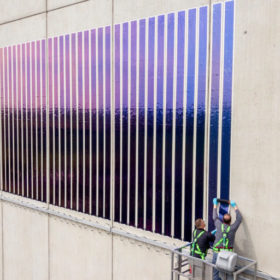
Heliatek and Lechwerke test PV facade on grain silo
The two companies have glued 230 square meters of solar film to the rough concrete surface of a grain silo in Donauwörth, Germany. The film is expected to generate approximately 6,700 kWh kilowatt-hours of solar power per year. Lechwerke and Heliatek want to open up new potential for the use of PV on other surfaces with the pilot project.
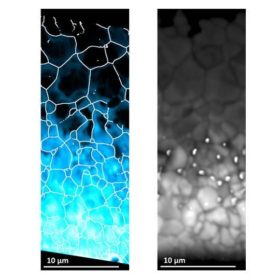
How selenium alloying gives CdTe thin film a boost
A new study conducted by an international team of scientists from leading institutions in the U.K. and the United States provides an explanation as to how the addition of selenide can greatly improve the efficiency of cadmium telluride solar cells. Explaining the performance boost will provide researchers with a route to explore further efficiency improvements, pushing the material’s cost even lower.
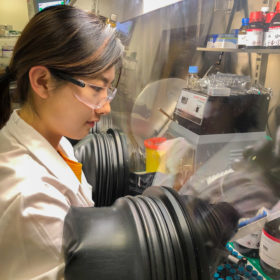
Best of both – quantum dot and perovskites team up for stable performance
Perovskites and quantum dot solar cells both have potential for use in high efficiency PV devices, but have major challenges to overcome to be a commercial reality. Scientists at the University of Toronto have found that if the two technologies are combined in the right way, they can stabilize each other.
Looking past perovskites
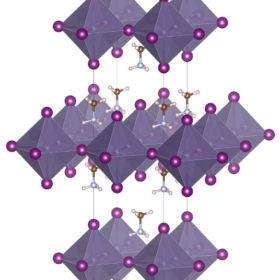
Researchers at the University of California, San Diego – with the help of the university’s Comet supercomputer – modelled thousands of halide compounds to come up with a shortlist of 13 materials that could be candidates for the efficient solar cell materials of the future.

Scientists cast light on how potassium can fix perovskite cells
Doping perovksite solar cells with potassium is said to eliminate interface trapping defects and mobile ion migration. ‘Hysteresis suppression’ is key for more efficient cells based on the promising material.
Europe bets on perovskite
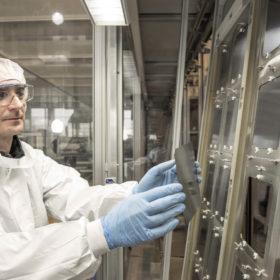
Europe’s most important scientific research institutes have joined forces to make perovskite solar applications more than just a dream. The European Perovskite Initiative consortium is planning to draw up a perovskite white paper.

Dutch scientists use fluoride to make perovskite solar cells more stable
Researchers claim the cell they have developed is able to retain 90% of its efficiency after 1,000 hours under extreme light and heat conditions.
Solar leads all forms of energy in digitalization: DNV GL

In a recent survey, DNV GL found that demand for blockchain-related skills in the solar sector is 50% higher than in other energy industries, while 33% of respondents said that the use of drones is having a significant impact on their businesses. However, the solar industry needs a common framework to help advance digitalization further.

ABB, Evolvere jointly launch blockchain energy pilot
The Swiss power group and Italian utility Evolvere have started a blockchain pilot project designed to facilitate transparent, secure peer-to-peer energy trading.
