
Interview: Array Technologies’ new CEO; expanding and eyeing bifacial
U.S.-based tracker supplier Array Technologies took part in the panel discussion on bifacial technology at the Future PV Roundtable during Intersolar Europe last week. pv magazine caught up with panelist Caesar Alberte, VP International, to discuss the company’s new CEO and its work on bifacial tracking.
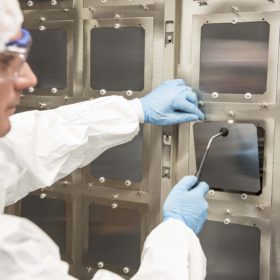
Oxford PV hits world record efficiency for perovskite/silicon tandem cell
U.K.-Germany based Oxford PV has announced the achievement of 27.3% efficiency on its perovskite-silicon tandem cell. The record has been confirmed by the Fraunhofer Institute for Solar Energy Systems (ISE).
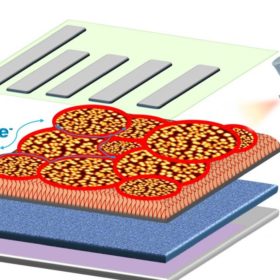
Researchers turn to spray coating in applying ETL to perovskites
Perovskites, a tempting low-cost alternative to crystalline silicon based solar cells, could be moving closer to commercial production thanks to a new way of applying the critical electron transport layer (ETL) pioneered by an international team of researchers.

“Stealing is not competition”: SolarEdge founder comments on IP claim
Following Monday’s announcement, pv magazine spoke to Lior Handelsman, of SolarEdge. The company VP is adamant Huawei has infringed the Israeli firm’s intellectual property, and says defending IP will see the PV industry grow.

The smarter E show: A wealth of innovations rewarded
At the smarter E-Intersolar Europe trade show this week, awards have been given to the technologies driving the energy transition to a low carbon future. Prizes include the Intersolar Award, recognizing PV technology; the EES prize for storage innovation; and the smarter E awards – one of which was given to an off-grid agricultural project in Australia.
Remote survey tool could offer solar future free of policy constraints
Welsh consultancy’s technology could help business, universities and local councils make fuel savings regardless of lack of PV subsidy in the U.K.

Intersolar: Indian minister outlines plan to become global renewables leader
Underlining India’s commitment to becoming the global renewable energy leader, Shri Anand Kumar, Secretary of India’s Ministry of New and Renewable Energy, said the country plans 500 GW of capacity by 2030. He also underlined India’s plans for becoming a solar and storage manufacturing hub; and said the International Solar Alliance needs to widen its membership.
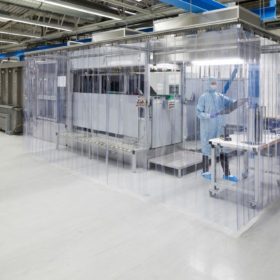
Nexwafe announces 250 MW “disruptive” kerfless wafer factory in Bitterfeld, Germany
The utilization rate of materials and energy in Nexwafe’s kerfless wafer production processes is said to be almost 100%, at a time when price pressures on solar modules are expected to get significantly heavier in the immediate future.

Lead free perovskites could unlock solar storage potential
Scientists at Oxford University say two lead-free perovskites investigated for their potential to raise the efficiency of solar modules – when used in tandem with high efficiency silicon cells – may also offer a leap forward in solar storage technology. In a paper published in Applied Physics Letters, Feliciano Giustino and George Volonakis, suggest halide […]

German scientists to develop energy-storing solar cells
The planned cell is to be based on the so-called norbornadiene-quadricyclane storage system.
