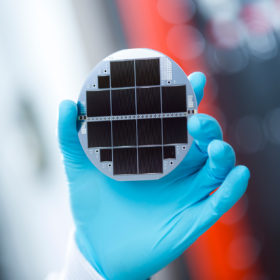
Fraunhofer ISE announces 33% efficiency for multi-junction solar cell
Together with Austrian equipment manufacturer EVG, Fraunhofer ISE has achieved an efficiency of 33.3% on a multi-junction solar cell. The highlight of the cell is the ultra-thin II-V semiconductor layer. However, it will be a few years before mass production is possible.
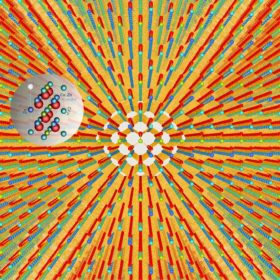
German scientists use germanium to improve performance of kesterite solar cells
Although current efficiencies for solar cells based on kesterite do not exceed 12.6%, the use of germanium may enable the development of cells with a higher energy band gap.
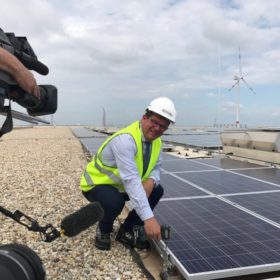
Belgium: Flemish government to support pilot floating solar projects with €6 million
The funds are part of a €100 million investment plan. The pilot projects will be developed on water surfaces that are not utilized for other purposes.
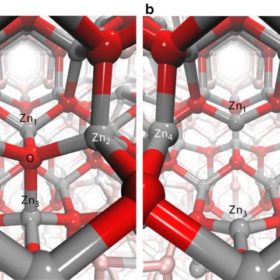
US researchers mull zinc oxide as solar cell manufacturing alternative to titanium dioxide
The group of scientists has identified a new process by which holes get trapped in nanoparticles made of zinc oxide.

JA Solar issues strong response to IP theft allegations
Chinese module manufacturer, JA Solar has issued a statement refuting assertions made by SolarWorld in hearings conducted last year, which were reported last week in the findings of United States Trade Representative (USTR) report into Chinese practices related to intellectual property.
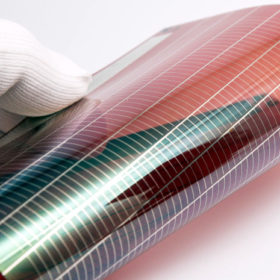
DuPont and Envision join forces to develop new degradation analytics for solar modules
Solar materials producer DuPont Photovoltaics Solutions to cooperate with Internet of Things pioneer in big energy data Envision to develop effective degradation analysis for solar modules.
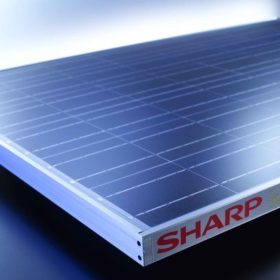
Sharp hits 25.09% efficiency on full size HJT cell
Japanese electronics giant, Sharp has announced the achievement of a 25.09% conversion efficiency, from a cell utilizing both heterojunction (HJT) and back contact technology. The measurement has been validated by Japan Electrical Safety & Environment Technology Laboratories (JET).

French energy giants keep investing in renewables
Engie has become partner of the solar and hydrogen-propelled catamaran, Energy Observer, while Total has become the founding partner of the Cathay Smart Energy Fund in China.

SERIS researchers develop new multi-cSi texturing technique
Scientists from the Solar Energy Research Institute of Singapore (SERIS) have announced the development of a new wet chemical process to allow multi-cSi wafers to be cut with diamond wire saw technology, and subsequently textured to reduce their reflectivity.
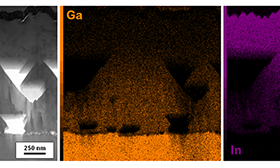
Luxembourg scientists provide new insight on how sodium can be used in thin film solar cell manufacturing
The research team found that sodium, contrary to common belief, does not decrease per se indium and gallium interdiffusion, but instead hinders intergrain diffusion by segregating at grain boundaries.
