
Fraunhofer ISE to investigate PV panels for commercial vehicles
German solar research institute Fraunhofer ISE is investigating the development of integrated PV panels for commercial vehicles. After conducting analyses using real life solar irradiance data, Fraunhofer sees great potential in this field.
Tempress & ECN develop process for IBC cell production
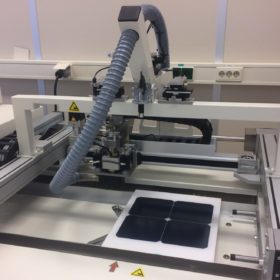
Equipment manufacturer Tempress has teamed up with Dutch research center ECN to develop a production process for n-type IBC solar cells with efficiency above 21%. A pilot of the new process was completed in just three months, illustrating its compatibility with mass production.
Solutions unveiled for next generation storage
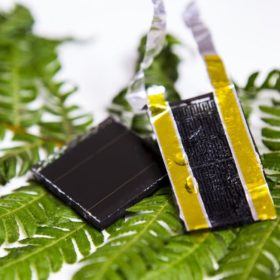
Two innovative new technologies with potential applications in solar were unveiled this week. Research teams across the world are looking at new way to boost solar’s stability by integrating with storage. Scientists in Australia and in China demonstrate their innovative steps toward achieving this.
Korean University team develops 21.2% efficient perovskite solar cell
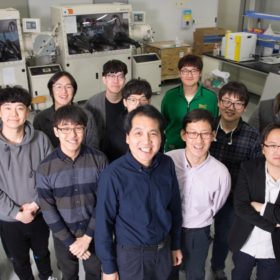
Researchers at the Ulsan Institute of Science and Technology (UNIST) in South Korea have announced the development of a method to produce perovskite solar cells, which the University says could contribute to commercialization of the technology.
British firm develops Brexit solar panel that harvests only UK sun
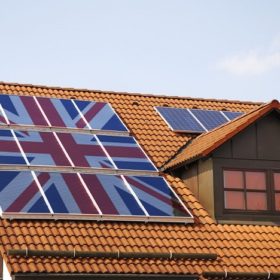
The two-facial module can be angled to ensure Brexit-supporting homeowners only harvest solar energy intended for the British Isles. 350 watt and ‘actual power’ versions available.
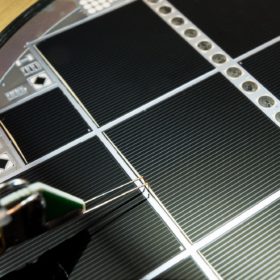
Fraunhofer ISE and EVG set 31.3% efficiency for silicon multi-junction solar cell
The German research institute and the Austrian semiconductor specialist have achieved a 31.3% efficiency for a silicon-based multi-junction solar cell. The result improves the previous record of 30.2%, which was also set by EVG and Fraunhofer ISE.
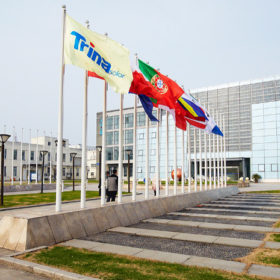
Stanford advocates ending China solar tariffs
The report led by a former Wall Street Journal editor gives national advice that mimics policies under President Obama’s energy department, but is unlikely to go anywhere under Trump.
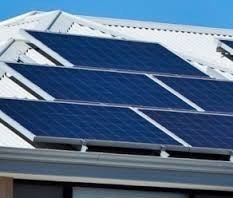
Solar monitoring company wins $2.1m ARENA grant
Sydney-based solar data start-up Solar Analytics has been awarded $2.1 million in grant funding from the federal government’s Australian Renewable Energy Agency, to fast-track its rooftop PV monitoring technology.
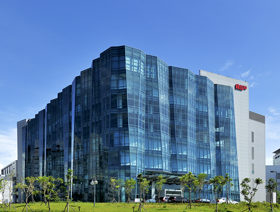
Neo Solar Power posts $206.9 million net loss in 2016
The Taiwanese PV cell producer partly attributed the NT$6.3 billion ($206.9 million) loss — down from a NT$139 million net profit in 2015 — to the idling of some of its production capacity in China.

Intevac reports massive ion implant tool order
The company’s ENERGi systems will be used to enable a more than 1 GW expansion of high-efficiency n-type mono cell capacity for an un-named customer in China, a big boost for the technology.
